.png)


There is a quiet shift happening in Ghana right now.
Not inside Parliament.
Not on television.
Not through campaign rallies or political speeches.
It is happening inside warehouses.
Inside shipping containers moving through Tema Port.
Inside industrial enclaves on the edges of Accra.
Inside giant red lettered retail buildings multiplying quietly across Accra, Kumasi, Kasoa, Takoradi, and beyond.
Most people still think they are looking at ordinary shops.
They are not.
They are looking at infrastructure.
Walk into almost any major China Mall today and slow down for a moment.
Watch carefully.
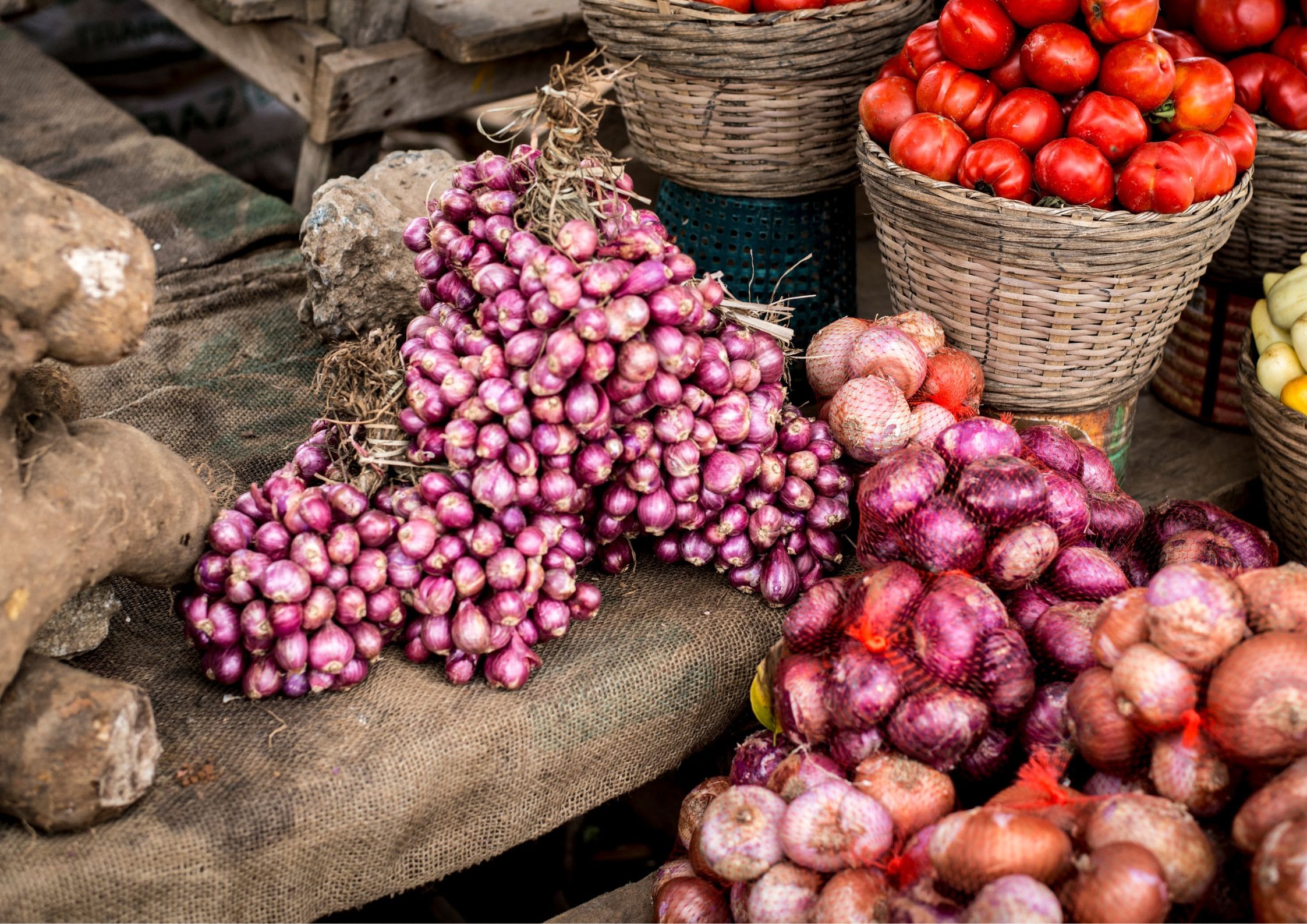
You will see market women buying products in bulk before sunrise. Small business owners filling trolleys with household goods. Young families calculating survival against inflation aisle by aisle. Traders quietly buying products they will later resell inside neighborhood shops across the country.
Then a dangerous question slowly begins forming beneath the movement:
If everybody is buying from the same system… who actually controls the market?
Because what China has built in Ghana is no longer just retail.
It is distribution dominance.
And it may be one of the most important economic shifts happening in the country right now.
For years, many Ghanaian businesses believed visibility was power.
Billboards.
Celebrity endorsements.
Radio campaigns.
Instagram marketing.
Lifestyle branding.
Meanwhile, another system was quietly expanding underneath the noise.
China did not spend years trying to become culturally loved.
It became economically unavoidable.
That was the real strategy.
And perhaps that is why the shift feels psychologically unsettling now. Because by the time most people noticed the storefronts, the supply chains were already deeply embedded.
According to trade data, China remains Ghana’s largest import source, dominating large portions of consumer goods entering the country. Electronics. Plastics. Household items. Appliances. Footwear. Groceries. Everyday essentials.
But the real story is not simply imports.
The real story is coordination.
Because many Ghanaian businesses are still competing shop to shop.
China is competing system to system.
Factories tied to Chinese industrial investment feed warehousing systems. Those warehouses feed wholesale channels. Those wholesale channels feed giant retail outlets. Those retail outlets then feed informal traders, market women, roadside shops, online sellers, and households across the country.
Manufacture.
Import.
Warehouse.
Distribute.
Retail.
Connected.
That changes the economics completely.
For decades, Ghana’s small retail economy survived because relationships mattered more than efficiency. The woman selling provisions nearby knew your family. The local kiosk gave credit when salaries delayed. Traders survived through familiarity, trust, and flexibility.
But inflation changes human psychology.
When prices rise aggressively, loyalty weakens.
Consumers stop asking:
“Who do I know?”
They start asking:
“Where is it cheaper?”
That is where the disruption quietly begins.
Because China Mall does not need emotional advertising when price itself becomes the marketing strategy.
No expensive campaigns.
No celebrity endorsements.
No influencer storytelling.
Just lower prices.
Massive inventory.
Endless availability.
And inside a struggling economy, affordability becomes magnetic.
Quietly, thousands of small Ghanaian retailers are now trapped inside a system they cannot fully compete against.
Some buy products from Chinese wholesale ecosystems and resell them at tiny margins simply to survive. Others can no longer compete at all because the pricing difference is too wide.
And that is where the story becomes emotionally uncomfortable.
Because many Ghanaian retailers still appear independent from the outside.
But increasingly, they no longer control:
their sourcing,
their pricing,
their manufacturing access,
their inventory leverage,
or their distribution power.
Which means many local businesses are slowly becoming the final retail layer of a commercial ecosystem controlled somewhere else.
That realization changes the conversation entirely.
Suddenly, this is no longer just a story about shops.
It becomes a story about structural vulnerability.
Because the deeper truth is even harder to admit:
China did not create Ghana’s weaknesses.
It optimized around them.
Weak manufacturing.
Expensive credit.
Fragmented logistics.
Import dependence.
Poor industrial coordination.
Limited economies of scale.
A Ghanaian entrepreneur may borrow money at interest rates exceeding 30 percent just to stock products for a small shop.
An integrated global supply chain does not think that way.
It thinks in containers.
Volume.
Ports.
Trade financing.
Warehousing efficiency.
Long term positioning.
That is not an equal contest.
And now the effects are spreading quietly across multiple layers of the economy.
Local manufacturers struggle against cheaper imported alternatives.
Retail margins continue shrinking.
Young entrepreneurs are discovering that branding alone cannot overcome supply chain disadvantages.
Even employment becomes complicated.
Yes, Chinese linked factories, warehouses, logistics systems, and retail networks create jobs for thousands of Ghanaians.
But another question quietly begins rising beneath the employment statistics:
Are Ghanaians building ownership within the system… or simply working inside a system they do not control?
That question matters because history shows that economic power rarely arrives dramatically.
It arrives through convenience.
Through affordability.
Through dependency.
Through becoming impossible to avoid.
And perhaps that is the most important insight underneath the China Mall phenomenon.
China did not emotionally conquer Ghanaian consumers.
It solved affordability inside an inflation stressed economy.
That is far more powerful.
Now regulators, trade authorities, policymakers, manufacturers, GUTA, and economic planners may eventually face a difficult national conversation:
At what point does competitive foreign participation become structural concentration?
Because when one ecosystem increasingly influences procurement, inventory flow, warehousing, pricing leverage, manufacturing access, and distribution networks, it slowly begins shaping the behavior of the entire market itself.
And once that happens, this is no longer just a retail story.
It becomes a sovereignty story.
Not emotional sovereignty.
Economic sovereignty.
The question is no longer whether China Mall is growing.
The real question is whether Ghana fully understands what is actually growing underneath it.

.png)
Stay informed with the latest African media trends, job opportunities, and development news. Connecting Africa with global media and development partners.
.avif)
.avif)
.avif)

.avif)