.png)


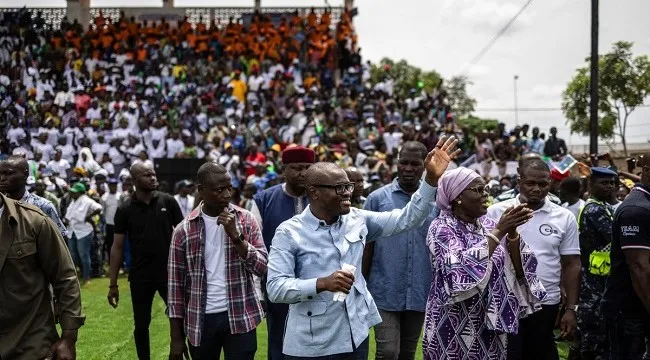
Nigeria’s decision to warn its citizens in South Africa to remain cautious following violent incidents in March 2026 reflects more than a routine advisory. It signals recognition of a pattern that has become difficult to ignore. For Nigerians living and working in South Africa, the warning does not introduce a new reality but reinforces an existing one, where periods of stability can quickly give way to tension, and where uncertainty has become part of daily calculation.
The recent unrest is best understood not as an isolated event but as part of a recurring cycle that has defined interactions between local communities and foreign nationals for years. Episodes of violence targeting African migrants have surfaced repeatedly, often following the same trajectory. Pressure builds beneath the surface, a trigger emerges, violence follows, and calm eventually returns without resolving the underlying causes. What should be treated as exceptional has, over time, taken on the characteristics of a pattern.
At the center of this pattern is structural strain. South Africa’s economic environment remains under pressure, with high unemployment and persistent inequality shaping competition in the informal sector. Foreign nationals frequently operate within this same space, building small businesses and participating in trade networks that are both visible and immediate. In this overlap, economic tension becomes personal. Over time, perception begins to harden around that tension. Nigerians in particular are often associated with criminal narratives, regardless of the evidence, and repeated exposure to these narratives transforms perception into justification. What begins as competition evolves into exclusion.
This dynamic sits in direct contrast to the broader ambitions of continental integration. Institutions such as the African Union continue to promote frameworks built on cooperation, mobility, and shared economic futures. Yet the lived experience on the ground reveals a disconnect between policy and practice. Movement may be encouraged at the institutional level, but it is frequently resisted at the community level, where economic pressure and social perception carry more immediate weight than continental vision.
Nigeria’s response reflects an awareness of this complexity. Rather than escalate tensions through direct confrontation, the government has chosen a measured approach, focusing on advisory and citizen awareness. It is a posture that prioritizes safety while preserving diplomatic balance, shaped by the understanding that these incidents are not singular disruptions but recurring features of a broader environment.
Beneath the immediate concern for safety lies a deeper question of belonging. The idea of a unified African identity remains aspirational when individuals moving across the continent are still treated as outsiders rather than participants in a shared space. A Nigerian in South Africa is not automatically recognized as part of a continental whole but is often viewed through the lens of competition and difference. This disconnect challenges the foundation of integration itself.
The trajectory that follows such incidents is now familiar. A trigger leads to violence, authorities respond, calm returns, and the system resets without structural change. Each episode is often framed as unexpected, yet the repetition suggests otherwise. These moments are not anomalies but expressions of unresolved pressures that continue to surface.
Nigeria’s warning, in this context, functions as more than a precaution. It is an acknowledgment of a contradiction between aspiration and reality, between the vision of a connected continent and the persistence of internal division. Until economic conditions, public perception, and governance responses are addressed together, the cycle is unlikely to break. What emerges instead is a pattern that remains predictable, even as each new incident is treated as if it were not.


.png)
Stay informed with the latest African media trends, job opportunities, and development news. Connecting Africa with global media and development partners.
.jpeg)
.avif)
.png)
.webp)
)%20(2).jpg)