.png)


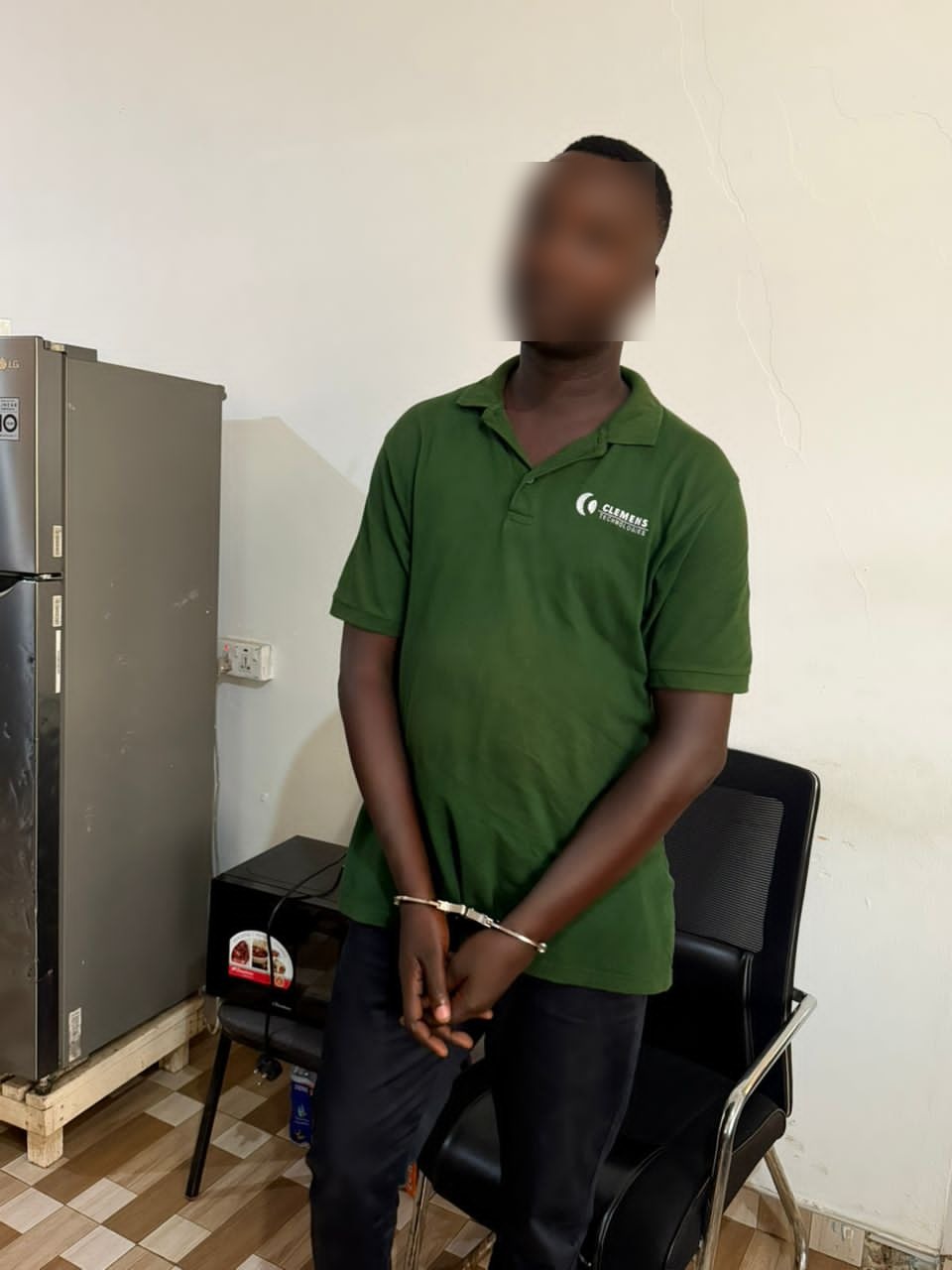
Two young Ghanaian men boarded a plane to the United States carrying the kind of confidence that often exists before reality catches up with a person. Airports are full of that confidence. It moves quietly through departure halls in expensive clothes, carefully chosen watches, and the private belief that movement itself represents power. To fly across continents is to feel untouchable for a few hours. You leave one system behind and imagine another has not yet seen you arrive.
But somewhere between Accra and the United States, the illusion may already have ended.
Because this was never simply the story of two men accused of romance fraud. It became a story about what happens when ordinary people collide with the invisible architecture of modern international enforcement, a machinery so interconnected that by the time its presence becomes visible publicly, the outcome may already have been determined privately.
Long before social media users became familiar with the names “Arrangement,” “Lancaster,” and “Abu Trica,” investigators across multiple jurisdictions were allegedly assembling fragments that appeared harmless on their own. A transfer here. A visa application there. Device metadata. IP logs. Airport movement. Banking activity. Online identities moving across social media platforms and romance websites.
None of it dramatic individually.
But modern investigations are no longer built around isolated incidents. They are built around pattern recognition.
And patterns, once stabilized inside a system, begin to behave like fingerprints.
According to the U.S. Department of Justice, the accused were allegedly linked to romance fraud schemes targeting victims through false online identities, emotional manipulation, and coordinated financial deception. Prosecutors allege that money moved across borders through laundering networks connected to digital communication systems and financial transfer channels.
The most revealing detail inside the indictment was not necessarily the allegations themselves. It was the list of agencies involved in the operation.
The filing acknowledged assistance from the FBI, Homeland Security Investigations, Customs and Border Protection, the U.S. Department of Justice, the FBI Legal Attaché Office in Accra, EOCO, Ghana Immigration Service, Ghana’s Financial Intelligence Centre, the Cyber Security Authority, the National Intelligence Bureau, and other institutions operating across both Ghana and the United States.
That is not the structure of a routine arrest.
It is the structure of a coordinated international investigation.
And once the agency list became public, reactions online changed immediately. Initial mockery gave way to a more unsettling realization. Many observers began asking whether investigators may already have been monitoring the suspects long before they boarded flights to America.
There is something psychologically unsettling about that possibility.
To sit on a plane believing you are travelling freely while immigration systems, financial intelligence databases, and federal investigators may already be anticipating your arrival. To walk through an airport terminal believing you are entering opportunity while authorities potentially see the same moment as the final stage of a multinational operation.
The modern world has fundamentally changed the meaning of borders. People still think geographically, but enforcement systems increasingly think digitally. A person can leave Ghana physically while remaining fully visible electronically through visa records, financial transfers, airport scans, SIM card registrations, device activity, and international intelligence coordination.
Each fragment appears meaningless independently.
Together, they form narrative.
That is the part many people still fail to understand about contemporary transnational investigations. Modern agencies are no longer waiting for dramatic mistakes. Systems now aggregate ordinary behavior until structure begins to emerge naturally from the data itself.
And structure is what prosecutors appear to believe they discovered.
Court filings also reveal that the investigation extended beyond a single incident. Other defendants connected to related cases had already pleaded guilty or received prison sentences before these latest arrests became public, suggesting authorities were not expanding outward from one isolated case but tightening inward around a wider alleged network.
That detail matters because it changes the timeline entirely.
The arrests may not have represented the beginning of the investigation.
They may have represented the final phase of something already deeply mapped.
The story also exposes a broader social reality shaping many modern fraud cases. Social media increasingly rewards appearance before legitimacy, encouraging displays of wealth, influence, and status long before the underlying structures supporting that lifestyle exist. In that environment, fraud can begin to resemble accelerated social mobility until law enforcement systems intervene.
And modern enforcement no longer arrives through a single institution.
It arrives through coordination.
An immigration officer asking additional questions. A flagged transfer. A visa review. A customs database alert. An FBI liaison office exchanging intelligence quietly with local agencies. Separate systems gradually converging around the same names.
By the time the suspects allegedly landed in America, the operation may already have moved beyond surveillance and into execution.
Which may ultimately be the most unsettling aspect of the entire case.
Not simply the allegations.
Not the money.
Not even the arrests themselves.
But the possibility that somewhere over the Atlantic Ocean, while passengers slept believing they were travelling toward opportunity, the system waiting on the ground already knew exactly who was arriving.


.png)
Stay informed with the latest African media trends, job opportunities, and development news. Connecting Africa with global media and development partners.



)%20(3).jpg)
.avif)

.avif)


.avif)
%20(1).avif)