
.png)


On a night in London, Ghanaian music looked like it had entered a new chapter.
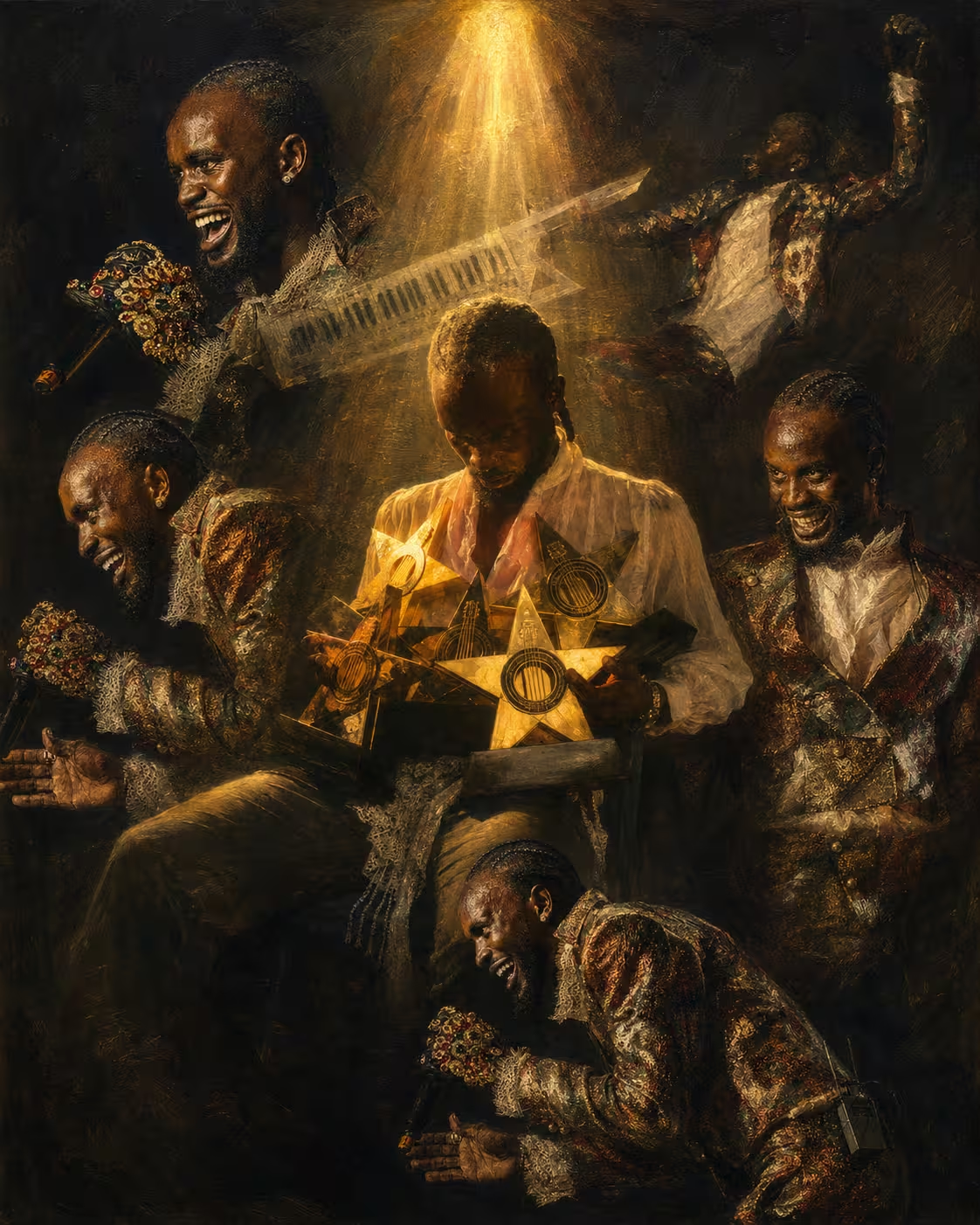
Kweku Smoke had sold out Electric Brixton, one of the respected live music venues in the United Kingdom. For a young Ghanaian rapper, it was more than a concert. It was a statement. It said Ghana’s new generation could carry its own weight beyond home soil.
Then the night became bigger.
Shatta Wale appeared.
Sarkodie appeared.
The crowd erupted.
For a few minutes, Ghanaian music looked united. The old tensions seemed small. The stage looked larger than ego. A younger artist was being supported by two giants who had carried their own wars, their own pride, and their own complicated histories.
Then came the tweet.
Stonebwoy did not mention names. He did not have to.
“These 2 guys have been faking to each other based on interests and timing. Convenient friendship. Even the devil hates that.”
That was enough.
Within minutes, Ghanaian social media returned to an old battlefield.
Bhim Nation on one side.
Shatta Movement on the other.
Sark Nation watching, defending, explaining, laughing, attacking.
The memes came first. Then the arguments. Then the old videos. Then the history lessons. Then the accusations. By sunrise, a new generation of fans was being dragged back into a war that began long before some of them were old enough to understand Ghanaian dancehall.
But this story did not begin in London.
It did not begin on X.
It did not begin with Kweku Smoke.
It began years ago, before the lights, before the awards, before the international stages, before the fan armies became digital militias.
It began with two young men trying to be heard.
Before There Were Kings
Long before Stonebwoy became Stonebwoy, and long before Shatta Wale became Shatta Wale, Ghana’s dancehall scene had its own underground proving grounds.
One of them was Tawala Beach.
It was not the polished industry we see today. There were no streaming campaigns, no luxury rollouts, no algorithmic fan wars, no carefully managed brand partnerships. There was a microphone, a crowd, a rhythm, and the brutal honesty of public judgment.
If the crowd did not feel you, you knew.
If the crowd crowned you, you knew that too.
Among the young artists fighting for recognition were Livingstone Etse Satekla and Charles Nii Armah Mensah.
One would become Stonebwoy.
The other would become Shatta Wale.
Reports from that period suggest Stonebwoy often dominated some of those early battle spaces. His style carried discipline. He sounded like a man sharpening a blade. Controlled. Technical. Focused. The music was not just performance. It was survival.
Shatta Wale was different.
Even in his earlier form as Bandana, he carried something wild and theatrical. He understood attention before attention became the economy. He understood that music was not only about melody, but presence. Not only about talent, but command.
Stonebwoy was the fighter who looked like he had studied the battlefield.
Shatta Wale was the fighter who looked like he wanted to burn the battlefield down and build his own kingdom from the ashes.
That difference would later become the emotional engine of the rivalry.
Because the two men did not simply want success.
They wanted recognition.
And in Ghanaian dancehall, recognition came with a crown.
The Return Of Shatta Wale
For a moment, it seemed as if history had moved past Bandana.
Then he returned.
Not quietly.
Not humbly.
Not as an artist asking for permission.
He returned as Shatta Wale.
It remains one of the most important rebrands in Ghanaian entertainment history. The man many people thought had faded came back with force, anger, charisma, street energy, and an almost frightening understanding of how to bend public attention toward himself.
Hit records followed.
Street loyalty followed.
Controversy followed.
Soon, Shatta Wale was not simply participating in Ghanaian music. He was dominating conversation around it. He positioned himself as Dancehall King, and for many fans, the title was not a debate. It was a fact.
But the problem with crowns is that they attract challengers.
And Stonebwoy was rising.
Where Shatta Wale was volcanic, Stonebwoy was composed.
Where Shatta Wale felt like raw street theatre, Stonebwoy felt like discipline, resilience, and international polish.
Where Shatta Wale’s followers saw a fearless king who refused industry gatekeeping, Stonebwoy’s followers saw a focused warrior who had survived pain, loss, doubt, and disrespect.
Ghana did not just get two dancehall stars.
It got two philosophies.
And philosophies do not settle their differences easily.
When Fans Became Armies
At first, the rivalry looked like competition.
That was normal.
Music needs competition. Genres grow through challenge. Artists sharpen each other. Fans debate. Awards become exciting. Stages become electric.
But Stonebwoy versus Shatta Wale became something deeper.
Their fan bases stopped behaving like ordinary supporters.
They became movements.
Bhim Nation.
Shatta Movement.
The names mattered. They created identity. They gave fans a flag to wave, a community to defend, and an enemy to challenge.
Every award became a referendum.
Every interview became evidence.
Every song became a weapon.
Every silence became suspicious.
If Stonebwoy won, Shatta fans had an explanation.
If Shatta Wale trended, Bhim fans had a counterargument.
If one travelled abroad, the other side questioned the numbers.
If one filled a venue, the other side questioned the capacity.
If one released a song, the other side questioned the impact.
The rivalry stopped belonging to the artists alone.
It became a public possession.
And that is when it became almost impossible to end.
Because once fans build their own identity around a war, peace can feel like betrayal.
The Wounds Became Personal
The darkest part of the Stonebwoy and Shatta Wale rivalry is that it did not remain within the safe boundaries of music.
It crossed into personal pain.
There were allegations around family.
There were comments interpreted as attacks on Stonebwoy’s physical condition.
There were interviews where anger spilled over.
There were diss records.
There were denials.
There were explanations.
But in a rivalry this emotional, facts rarely travel alone. They travel with hurt, loyalty, memory, and interpretation.
For Stonebwoy’s supporters, some attacks went beyond entertainment. They saw their artist as someone who had endured real struggle and deserved respect.
For Shatta Wale’s supporters, their artist was misunderstood, unfairly demonized, and constantly judged for saying loudly what others only whispered.
That is why both men became more than musicians to their fans.
Stonebwoy became a symbol of resilience.
Shatta Wale became a symbol of rebellion.
Once a rivalry reaches that level, it becomes almost spiritual. Fans are no longer debating songs. They are defending meaning.
The Night Ghana Music Stopped
Then came May 19, 2019.
The Vodafone Ghana Music Awards.
Stonebwoy had been announced as Reggae and Dancehall Artiste of the Year.
It should have been another victory speech.
Instead, it became one of the most unforgettable nights in Ghanaian entertainment history.
Shatta Wale and members of his camp approached the stage.
Depending on who tells the story, the intention was either congratulation, provocation, confusion, or a badly timed movement that history would never forgive.
What followed was chaos.
The two camps clashed.
The ceremony was disrupted.
Then came the image that burned itself into Ghana’s cultural memory.
Stonebwoy appeared to pull a firearm during the confrontation.
That image changed everything.
The rivalry was no longer just a music beef.
It became a national conversation.
Police became involved.
The courts became involved.
Award organizers acted.
Government officials and industry leaders called for peace.
For many Ghanaians, the VGMA incident became the moment the rivalry crossed a line. The drama had become too real. The entertainment had become too dangerous. The fan war had left Twitter and entered the national stage.
And yet, strangely, the incident also made the mythology bigger.
Before 2019, Stonebwoy and Shatta Wale had a rivalry.
After 2019, they had folklore.
Peace, Or Something That Looked Like It
After the VGMA chaos, Ghana saw what looked like reconciliation.
The photos came.
The smiles came.
The peace messages came.
There were public gestures that suggested both men understood the damage the rivalry had caused.
For a moment, the country wanted to believe.
But peace is not the same as silence.
And silence is not the same as healing.
The public wanted closure. The industry wanted calm. The artists tried, at different moments, to show maturity.
But old wounds do not disappear because cameras are present.
The rivalry continued in fragments.
A comment here.
A song there.
A subliminal post.
A rumour.
A fan interpretation.
A media headline.
The war did not always roar.
Sometimes it whispered.
But it never fully left.
Why The Tweet Worked
That is why Stonebwoy’s May 2026 tweet caused such a reaction.
The words were not extraordinary on their own.
The timing made them explosive.
Shatta Wale and Sarkodie had appeared together at Kweku Smoke’s London concert. To many fans, it looked like unity. It looked like Ghanaian music supporting Ghanaian music. It looked like older stars showing up for a younger one.
Then Stonebwoy questioned the authenticity of what many people were celebrating.
Was he speaking from old knowledge?
Was he throwing shade?
Was he warning fans not to confuse convenience with loyalty?
Was it jealousy?
Was it honesty?
The answer depends on which side of the battlefield you stand.
And that is exactly why the tweet worked.
It did not explain too much.
It left space for suspicion.
And suspicion is the oxygen of fan wars.
The Bigger Question
The most uncomfortable truth about Stonebwoy and Shatta Wale is that their rivalry may have helped both men.
This is the part fans hate to admit.
Shatta Wale gave Stonebwoy a mountain to climb.
Stonebwoy gave Shatta Wale a rival worthy of his crown.
Together, they made Ghanaian dancehall feel urgent. They forced media houses to pay attention. They turned award categories into national arguments. They made fan loyalty feel like citizenship.
Their rivalry helped create headlines.
Headlines created attention.
Attention created value.
Value created bookings, streams, influence, and cultural power.
That does not mean the rivalry was always good.
It clearly carried costs.
It created bitterness. It distracted from collaboration. It sometimes lowered the tone of public conversation. It placed emotional pressure on fans and artists alike. It made Ghanaian music look divided at moments when unity may have served the industry better.
But to pretend the rivalry did not help build their legends would be dishonest.
Great rivals often become trapped inside each other’s stories.
Ali and Frazier.
Jay Z and Nas.
Messi and Ronaldo.
Stonebwoy and Shatta Wale may belong to that same strange category, where two men spend years trying to defeat each other, only to discover that history remembers them together.
The Industry They Built And Bruised
Ghanaian music is bigger now.
The new generation is moving differently.
Artists are selling tickets abroad.
Fans are more global.
The diaspora is paying attention.
Social media has made every concert, every tweet, every lyric, and every backstage moment part of a larger public archive.
That is why the Kweku Smoke moment mattered.
A young artist sold out London.
Two major stars appeared to support him.
It could have been a clean story of growth.
But the old rivalry returned and swallowed the moment.
That is the deeper tragedy.
Sometimes Ghanaian music tries to move forward, and the past grabs it by the collar.
Not because the past is irrelevant.
But because it was never fully resolved.
The Final Crown
So who won?
Stonebwoy fans will say Stonebwoy did. They will point to his discipline, his international recognition, his resilience, his craft, his live performance strength, and his ability to represent Ghana beyond local noise.
Shatta Wale fans will say Shatta Wale did. They will point to his street power, his comeback, his catalogue, his fearlessness, his cultural dominance, and his unmatched ability to command attention.
Both sides will argue forever.
But perhaps the real answer is more complicated.
Maybe neither man won the war.
Maybe the war won.
It made both men larger.
It made both fan bases stronger.
It made Ghanaian dancehall impossible to ignore.
It also left scars.
That is why one tweet can still shake the country.
Because this rivalry was never simply about music.
It was about pride.
Pain.
Recognition.
Class.
Street power.
Industry politics.
Respect.
And two men who met in the same musical universe and refused to bow to each other.
The crown remains cracked.
The fans remain armed with opinions.
The tweets still travel faster than the songs.
And Ghanaian music is still asking the same question it has asked for nearly two decades.
Can two kings share one kingdom?
Or was this war always the thing that made them kings in the first place?


.png)
Stay informed with the latest African media trends, job opportunities, and development news. Connecting Africa with global media and development partners.

.avif)
.png)
.png)
)%20(1).png)

).jpg)
)%20(3).jpg)