
.png)


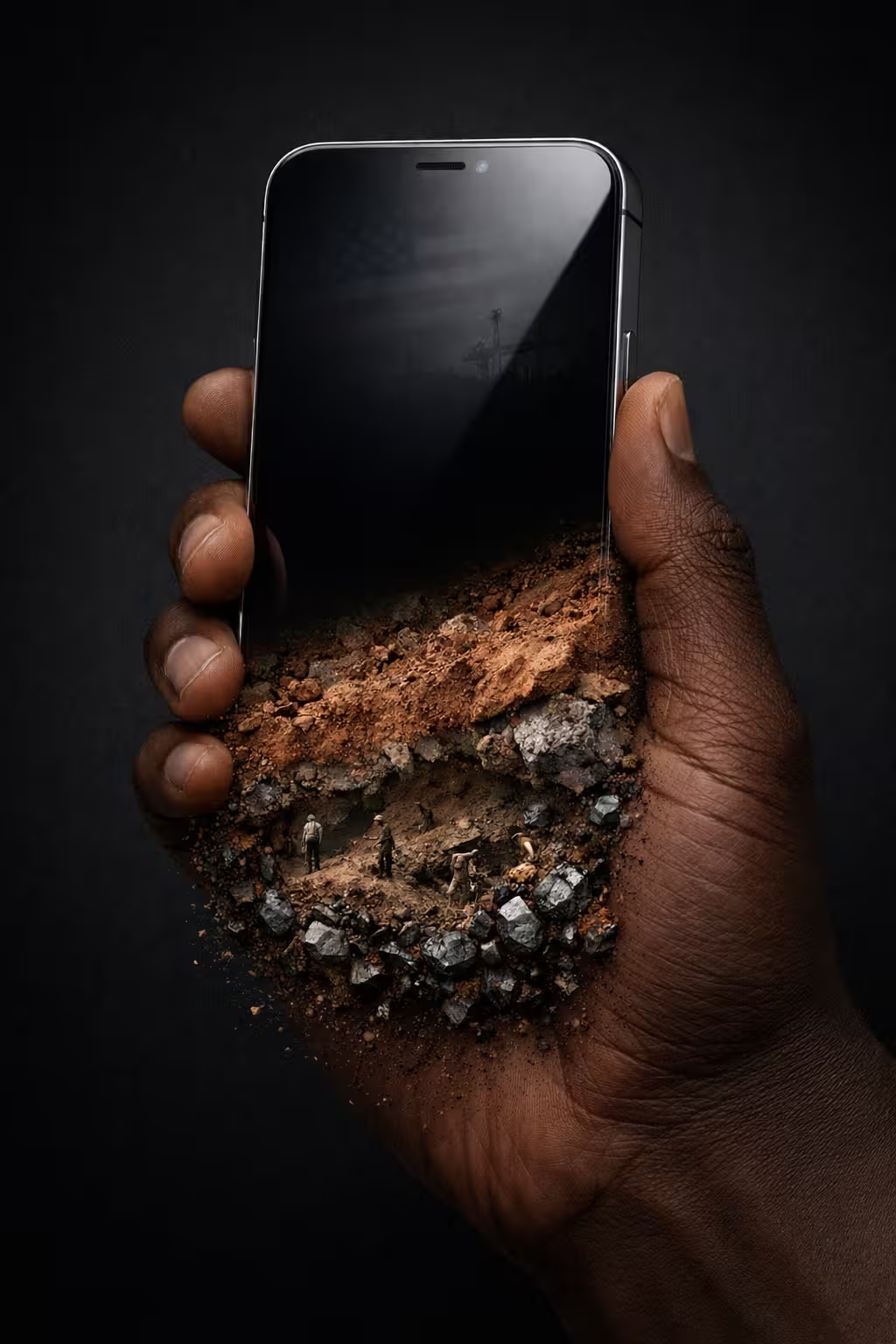
Take a moment to think about the battery inside a modern electric car. That battery is what allows the vehicle to move without petrol. It stores energy, releases it smoothly, and makes the promise of cleaner transportation possible. What most drivers in Europe, China, or the United States rarely consider is that the materials inside that battery likely began their journey thousands of kilometres away, deep beneath African soil.
Cobalt, lithium, manganese, and graphite are among the key minerals that allow modern batteries to function. Without them, electric vehicles would not operate, smartphones would struggle to hold power, and large energy storage systems used for renewable electricity would simply not work. These minerals are quietly becoming some of the most important raw materials in the global economy.
A large share of them comes from Africa.
Consider cobalt. Much of the world’s supply is produced in the Democratic Republic of Congo. Lithium deposits are being developed in countries such as Zimbabwe and Namibia. South Africa and Gabon hold significant reserves of manganese, which helps stabilise battery chemistry. Graphite, another critical ingredient for battery production, is mined in countries including Mozambique and Madagascar.
These resources have suddenly moved from the background of global trade to its centre. Governments now treat them as strategic assets. Car manufacturers compete to secure access. Technology companies track supply carefully because shortages could slow the transition to electric vehicles and renewable energy.
Yet the story becomes more complicated when one follows the minerals beyond the mine.
Most of the cobalt dug from Congolese soil does not become a battery in Congo. Lithium extracted from Zimbabwe rarely turns into finished battery cells within the country. Instead, raw materials leave African ports in ships bound for industrial processing plants in other regions. There they are refined, converted into battery components, and eventually assembled into finished products such as electric vehicles and large energy storage systems.
This step in the process matters greatly because the real economic value often appears after the mineral leaves the ground.
Mining generates revenue, jobs, and taxes. But refining and manufacturing usually produce higher profits and more advanced industrial activity. The companies that control these stages of production often shape the global market.
For decades, African economies have largely participated in global trade as suppliers of raw materials. Gold, copper, oil, cocoa, and diamonds all followed a similar pattern. The resources were extracted locally, then processed and manufactured elsewhere. The finished goods were later sold back to global consumers at far higher prices.
The question now facing African policymakers is whether the emerging battery economy will follow the same path.
The demand for these minerals is expected to grow sharply over the next two decades. Electric vehicles require large battery packs. Renewable energy systems often rely on energy storage to stabilise power supply. As countries attempt to reduce carbon emissions, the need for battery minerals continues to rise.
In response, governments and companies are racing to secure reliable supply.
China has invested heavily in mining and refining capacity linked to African cobalt and lithium. Western governments are now attempting to diversify supply chains so that their industries are not overly dependent on a single country. International finance institutions have begun supporting new mining projects and infrastructure corridors designed to move minerals from inland deposits to coastal ports.
At the centre of this competition sits Africa.
The continent holds the resources that make the energy transition possible. Yet holding resources does not automatically guarantee control over the industries built around them. Control often lies in technology, processing capacity, logistics systems, and access to capital.
This creates an important strategic debate within many African countries.
Some policymakers argue that exporting raw minerals remains necessary in the short term. Mining projects require large investment, and building full industrial supply chains takes time. Others believe Africa should move quickly to capture more value by encouraging local refining, battery manufacturing, or related industries.
Several governments are already experimenting with new approaches. Zimbabwe, for example, has introduced policies aimed at encouraging domestic lithium processing. In other countries, discussions are taking place about limiting the export of unprocessed minerals in order to stimulate local industry.
Such strategies are not easy to implement. Processing plants require stable electricity, technical expertise, and strong regulatory systems. Investors often prefer established industrial zones elsewhere in the world where supply chains already exist. Yet the long term economic implications are significant.
If African economies remain primarily exporters of raw minerals, the energy transition could reproduce an old pattern of extraction. The continent would supply the materials that power a new generation of technology, while much of the manufacturing wealth accumulates elsewhere.
If, however, African countries gradually build capacity in refining and related industries, the outcome could look very different. Mines could become the first step in a wider industrial ecosystem rather than the final stage of local economic participation.
The decisions made over the coming decade will shape which path becomes reality.
Electric cars, smartphones, and renewable energy systems may appear as symbols of technological progress. But the story behind them reaches deep into the ground beneath Africa. What happens to those minerals after they are extracted may quietly determine whether the continent remains a source of raw materials for global industry, or begins to claim a larger role in building the technologies that define the future.


.png)
Stay informed with the latest African media trends, job opportunities, and development news. Connecting Africa with global media and development partners.
.png)




.avif)


.png)