.png)


Before sunrise in Accra, the tomato market is already in motion. Trucks reverse into tight spaces. Crates are unloaded in quick succession. Traders gather, scanning the arrivals.
“The Burkina load hasn’t come yet,” one woman says quietly to another. Prices are already being adjusted.
No announcement has been made. No official shortage declared. Yet the market is responding to something that has not yet happened.
This is not just about tomatoes.
It is about how systems determine outcomes.
When tomato prices rise in Ghana, the explanation is usually straightforward: shortage.
But this explanation is incomplete.
Research and market observations suggest that what appears as shortage is often a disruption in supply structure rather than a collapse in production. According to studies referenced by the International Food Policy Research Institute, Ghana’s tomato consumption remains consistently high, but supply is uneven and unreliable.
The issue is not simply that there are not enough tomatoes. It is that the system delivering them is unstable.
Ghana’s reliance on Burkina Faso developed gradually through market behavior.
Tomato production in Ghana is highly seasonal, particularly in northern regions where irrigation is limited. During dry periods, output declines sharply. At the same time, parts of Burkina Faso have built more stable dry-season production systems, supported by small-scale irrigation and coordinated planting cycles.
This created a natural trade flow.
According to field-based analyses referenced by IFPRI, traders began sourcing tomatoes from Burkina Faso to fill Ghana’s seasonal gaps. Much of this trade operates informally, outside official records, but it is consistent and deeply embedded.
Over time, what began as a seasonal adjustment became a structural feature of the market.
It is important to distinguish between production capacity and system performance.
Ghana can grow tomatoes. The country has suitable land, farmers, and agro-ecological diversity. However, consistent delivery to market remains a challenge.
A value chain assessment by the World Bank identifies several constraints:
Even when production is strong, a significant portion does not reach consumers efficiently.
The conclusion is clear. This is not solely a farming problem. It is a systems coordination problem.
In Ghana’s tomato economy, traders play a central role.
They determine where supply comes from. Their decisions are based on price, reliability, and risk. According to the World Bank’s value chain analysis, intermediaries respond quickly to changing conditions, shifting sourcing across borders when necessary.
If Burkina Faso offers more consistent supply during key periods, traders adjust accordingly.
This dynamic often overrides policy intentions. While governments may aim to promote local production, supply chains follow incentives, not directives.
The informal economy, in this case, is not peripheral. It is the mechanism through which the system operates.
Ghana has made multiple attempts to industrialize its tomato sector.
Processing facilities in Nsawam, Pwalugu, and Wenchi were established to reduce reliance on imports and stabilize demand for farmers. However, most have struggled to operate sustainably.
Research by the International Food Policy Research Institute indicates that these challenges stem from inconsistent raw material supply, high operating costs, and competition from imported tomato paste.
Processing requires steady input. Ghana’s supply chain has not been able to guarantee this.
By contrast, Burkina Faso has recently taken steps to prioritize domestic processing by limiting fresh tomato exports during key periods. This suggests a strategic shift toward retaining more value within its own economy.
Ghana’s tomato sector is defined by a dual reliance.
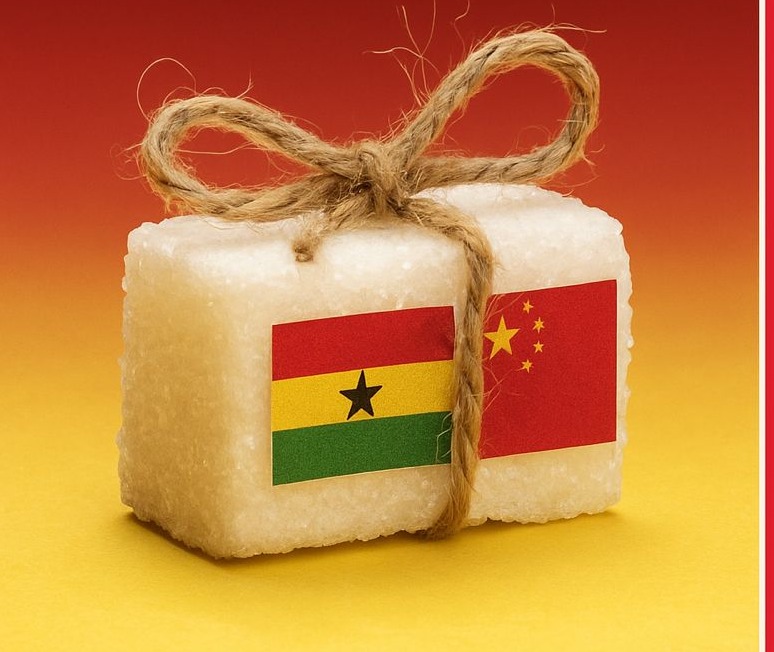
On one side, the country depends on Burkina Faso for fresh tomatoes during supply gaps. On the other, it relies heavily on imported tomato paste, much of it sourced from global producers including China and parts of Europe.
According to data referenced in the World Bank’s agricultural logistics roadmap, imports of processed tomato products remain significant.
This structure has economic consequences:
The tomato becomes a case study in how value chains shape economic outcomes.
Events in 2026 made these dynamics more visible.
Security disruptions in northern Burkina Faso affected trader movement. Shortly after, export restrictions were introduced to support domestic processing.
The impact on Ghana’s markets was immediate. Prices increased. Supply tightened.
These events did not create Ghana’s dependence. They revealed its extent.
A system that relies on external stability becomes vulnerable when that stability is disrupted.
At a broader level, the tomato trade reflects how value chains operate.
A value chain includes all stages from production to processing and distribution. According to analysis by the World Bank, countries that control more of these stages retain more economic value.
Burkina Faso’s recent policy direction suggests an effort to move beyond raw production into processing. Ghana remains focused on stabilizing production and distribution at the base of the chain.
This pattern extends beyond tomatoes. It is visible across multiple sectors in Africa, where production is local but value capture is external.
Ghana’s tomato challenge is not permanent. But it requires a shift in approach.
The issue is not seasonal shortage. It is system coordination.
Progress depends on aligning key components:
Isolated interventions will not be sufficient. The system must function as a whole.
In the markets of Accra, the daily movement of tomatoes reflects decisions made far beyond the stall.
For now, a significant portion of that system begins across the border in Burkina Faso.
Ghana’s tomato problem is solvable. But it will not be solved by increasing production alone. It will be solved by building a system that connects production to value.
Across Africa, similar patterns exist. The lesson is consistent.
Economic independence does not come from producing resources alone.
It comes from controlling the systems that move, process, and price them.


.png)
Stay informed with the latest African media trends, job opportunities, and development news. Connecting Africa with global media and development partners.
.avif)

.png)





.avif)