.png)


Africa’s mining story is beginning to change in structure, not just in narrative.
For decades, bauxite has left the continent in raw form, with refining and higher-value processing taking place elsewhere. The result has been a persistent imbalance. Africa holds nearly 30 percent of global bauxite reserves, yet contributes less than 1 percent of alumina production.
That gap reflects systems, not scarcity.
What is now emerging is a shift toward retaining value within the continent through refining capacity, industrial policy alignment, and targeted capital deployment.
The move into alumina refining represents a clear transition from extraction to processing.
Refining increases export value per ton while introducing industrial capabilities that extend beyond mining. It creates demand for skilled labor, supports local supply chains, and connects mineral production to energy and infrastructure systems.
This is not an expansion of output. It is a reconfiguration of where value is created.
Nigeria’s refinery project illustrates how this shift is being operationalized.
Backed by the Africa Finance Corporation and the Solid Minerals Development Fund, the country is developing a one million ton per year alumina refinery. The project is expected to contribute significantly to GDP while supporting the government’s broader objective of increasing mining’s role in the economy.
The refinery is designed to run largely on domestic gas, aligning with Nigeria’s Decade of Gas initiative. This integration of energy and industry is central to the model.
As noted by Henry Alake, the focus is shifting away from export corridors toward local industrial activity that generates jobs and retains value.
In Guinea, plans are underway to develop six alumina refineries by 2030, targeting a combined capacity of around 7 million tons per year. Partnerships with companies such as Chinalco and Alcoa reflect strong international participation in these efforts.
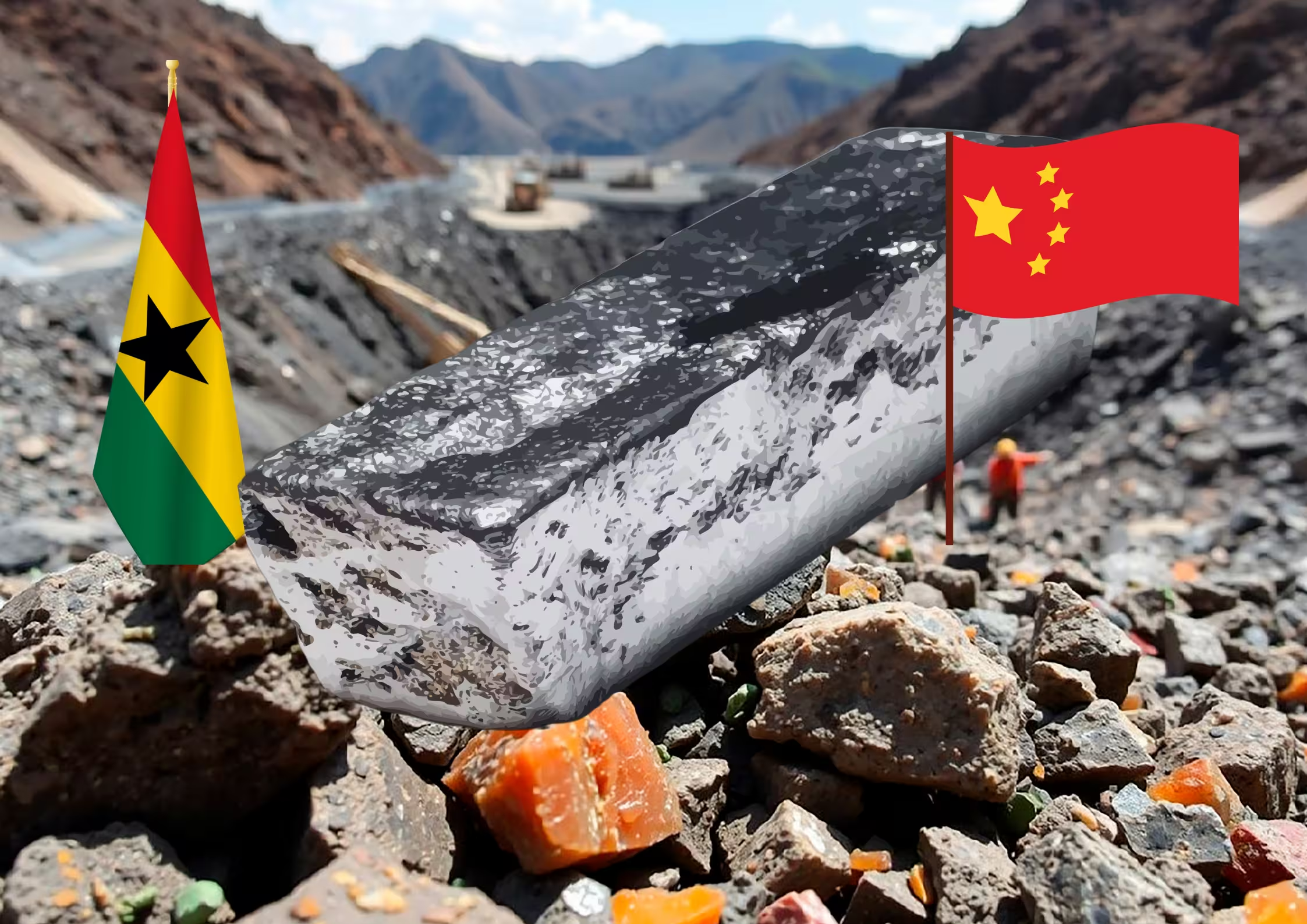
Ghana is pursuing a parallel strategy, aiming for 4 to 6 million tons of refining capacity through partnerships with Mytilineos SA. The objective is to build an integrated bauxite-to-alumina value chain within the country.
In Cameroon, Canyon Resources is advancing feasibility studies for a refinery linked to its Minim Martap project, indicating that the refining trend is extending beyond established producers.
The implications of this shift are practical and measurable.
Refining increases export value relative to raw ore.
It introduces industrial employment and technical capacity.
It connects mining output to energy systems and infrastructure investment.
The constraint is no longer conceptual.
It is execution.
The pace at which these projects move from financing to construction and operation will determine whether value is retained within African economies or continues to be realized elsewhere.
These developments will be a central focus at African Mining Week 2026, where investors, developers, and policymakers are expected to align around refinery deployment and industrial scaling strategies.
The direction is becoming clearer.
Africa is not short of resources.
It is beginning to build the systems required to convert them into industrial value.


.png)
Stay informed with the latest African media trends, job opportunities, and development news. Connecting Africa with global media and development partners.

.avif)


%20(1).avif)