.png)


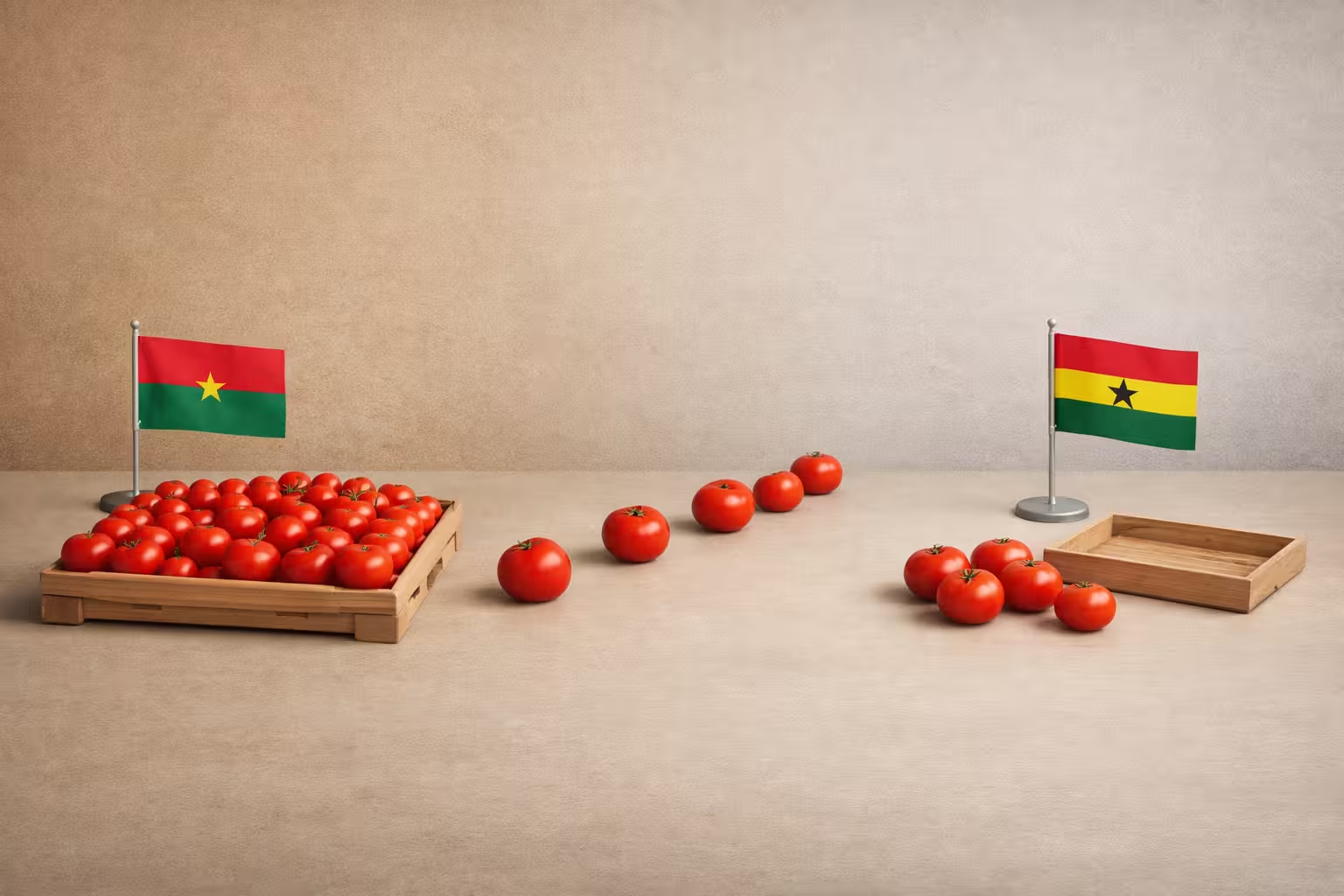
The shares had reportedly already moved before the suspension arrived. That became the entire fight.
WHAT HAPPENED IN PART ONE
In May 2008, approximately 14.3 million CAL Bank shares were reportedly sold through Databank Brokerage, with Ecobank acting as settlement bank.
But before the transaction could fully settle, regulatory concerns reportedly triggered an intervention.
The problem was timing.
By the time the suspension reportedly arrived, the shares may already have moved on the registrar’s records.
That single moment created the legal battle that would later consume Ghana’s financial system for years:
Had the transaction already legally happened before the system tried to stop it?
CHAPTER FIVE: THE SYSTEM SPLIT
By Monday morning, nobody appeared fully certain what had legally happened anymore.
That uncertainty spread quietly across the institutions connected to the transaction.
Inside some offices, the deal was being treated as interrupted.
Inside others, the transaction already appeared completed.
That difference changed everything.
The registrar’s records reportedly showed the shares had already moved into the buyer’s name.
Operationally, the transfer appeared finished.
But elsewhere inside the system, conversations were still happening as though the transaction could somehow be reversed.
That contradiction became the center of the war.
Because modern financial systems depend on institutions agreeing on sequence.
Who owned what.
When ownership changed.
When obligations activated.
And whether a transaction had crossed the point where reversal was no longer legally possible.
Now the system itself appeared divided on those questions.
Inside Accra’s financial sector, the atmosphere reportedly became cautious.
Not chaotic.
Careful.
People stopped speaking confidently about the transaction because nobody wanted to stand too firmly beside a version of events that could later collapse inside court.
The deeper problem was becoming clearer:
If the shares had already legally transferred before the intervention arrived, then certain obligations might still survive.
And if those obligations survived, the exposure could become enormous.
CHAPTER SIX: THE MONEY
At the center of the dispute sat approximately GH¢6.16 million.
Frozen.
But the money itself was not standing still.
According to court discussions surrounding the matter, the arrangement reportedly carried a 30% interest structure.
That meant every delay mattered.
Every adjournment mattered.
Every passing year reportedly changed the mathematics underneath the case.
The legal battle was no longer merely continuing.
It was expanding.
Across financial history, some disputes become dangerous not because of the original transaction itself, but because of what time quietly does to unresolved money.
That was beginning to happen here.
As hearings continued and appeals evolved, the amount connected to the dispute reportedly kept growing underneath the litigation.
Quietly.
Year after year.
And the longer the uncertainty survived, the harder it became for the institutions involved to retreat cleanly from the consequences.
CHAPTER SEVEN: THE PHONE CALL
Then one ordinary banking interaction changed the direction of the entire case.
According to discussions surrounding the litigation, Ecobank reportedly contacted Daniel Ofori regarding disbursement instructions connected to the funds.
How would he like the money disbursed?
At first glance, the question sounded routine.
Banks ask such questions every day.
But this case was no longer behaving like an ordinary banking dispute.
Now every action inside the timeline carried legal meaning.
The phone call introduced a dangerous possibility into the litigation.
If the bank was discussing payment instructions, had the institution already internally recognized the funds as belonging to Daniel Ofori?
That question slowly became one of the most important issues inside the dispute.
Because if institutional recognition had already happened before the suspension destabilized the transaction, then the case was no longer merely about interrupted settlement.
Now it was becoming a fight over whether the system had already crossed irreversible thresholds.
Lawyers began focusing heavily on sequence.
What happened first?
When did ownership change?
When did recognition occur?
At what exact moment did legal obligation begin?
Those questions slowly pulled the courts deeper into the mechanics of Ghana’s financial infrastructure itself.
And the deeper the courts looked, the more dangerous the implications became.
CHAPTER EIGHT: THE FEAR
The case was now evolving beyond a dispute between individuals.
Bankers followed it carefully.
Lawyers studied it intensely.
Investors watched it nervously.
Because underneath the litigation sat a much larger issue:
What happens when different parts of a financial system stop agreeing on whether a transaction has legally completed?
That question frightened institutions because financial systems survive largely on synchronized trust.
A registrar records ownership.
A bank processes settlement.
A regulator intervenes.
A broker executes instructions.
Each part of the machinery depends on sequence remaining stable and universally accepted.
But inside this case, sequence itself had become disputed.
The shares reportedly moved before the suspension arrived.
That was the central problem.
If the courts ultimately concluded that critical thresholds had already been crossed before intervention occurred, then the implications would stretch far beyond this single transaction.
The case would expose vulnerabilities inside timing, settlement, institutional recognition, and operational coordination itself.
And once trust weakens inside financial systems, uncertainty spreads quietly behind it.
Years earlier, Daniel Ofori had watched traders collapse inside Kumasi Central Market after crossing invisible financial thresholds they did not fully understand.
Now Ghana’s banking system itself appeared to be confronting a similar problem.
The machinery had already moved.
The only remaining question was whether the law would eventually recognize how far.
“The shares reportedly moved before the suspension arrived. That became the entire fight.”
CASE FILE
Shares Involved: Approx. 14.3 million CAL Bank shares
Amount in Dispute: Approx. GH¢6.16 million
Reported Interest Structure: 30%
Core Question Emerging: Had the transaction already legally completed before intervention arrived?
Independent African storytelling survives because readers decide it should.
Note:
If this story stayed with you after reading, help us keep building work like this.
MoMo: 0248484405- Eykrom Company Limited
Bank: First national Bank
Account Name: Eykrom Company Limited
Acct Number: 1021005307101
Branch: Accra Main.
Branch Code 330103
Swift Code FIRNGHAC
Africa’s trusted news source.
NEXT PART: THE REGISTER
The courts begin dismantling the timeline.
The registrar’s stamp.
The ownership battle.
And the sentence that would later shake the entire dispute:
“PLAINTIFF IS ENTITLED TO HIS MONEY.”


.png)
Stay informed with the latest African media trends, job opportunities, and development news. Connecting Africa with global media and development partners.

.avif)

.avif)

.avif)

)%20(1).jpg)