.png)


Last Sunday, I traveled from Paris, France, to Lomé, Togo, to attend the Biashara Afrika conference, the premier AfCFTA forum connecting African private sector leaders with government officials to foster and expand intra-African trade. As a Ghanaian ECOWAS passport holder, I should not have needed a visa to enter the country. In fact, before traveling, I obtained an immigration authorization from the Togolese government confirming that I was authorized to travel to Togo and exempt from visa requirements.
However, upon arrival, I was informed by border control officials that although I was Ghanaian, because I had traveled from France rather than Ghana, I would need a visa. Even after presenting my travel authorization — which clearly listed Paris as my departure city and confirmed my visa-exempt status — I was still told that I required a visa.
The border agents insisted this was the law. But as an immigration lawyer myself, I know the law very well. ECOWAS nationals enjoy freedom of movement within member states, and that privilege is tied to possession of an ECOWAS passport, not the country from which one departs. To no avail, I went from booth to booth, speaking with one border control agent after another, searching for a voice of reason.
Everything changed — for the worse — when the final border agent noticed the absence of a French entry stamp in my Ghanaian passport. I explained that I had entered France using my American passport rather than my Ghanaian one. At that point, the agents shifted their position entirely, refusing to admit me with my Ghanaian passport at all and instead demanding that I enter the country using my American passport with a visa.
By then, I was incredulous. I reminded them that, first and foremost, I was an ECOWAS national entitled to enter the country visa-free with my ECOWAS passport. Secondly, I was attending the conference as an official guest of the African Union and AfCFTA, and it was deeply ironic that I was being forced to enter the country and attend an African Union event as an American rather than as an African citizen. Even after reading my invitation letter from the AfCFTA Secretary-General, the officials told me that if I wanted to leave the airport, it would only be after complying with their demands. Coincidentally, the Honorable Minister of Industry, Trade, and Investment of Nigeria, Dr. Jumoke Oduwole, had been a passenger on my flight and overheard my dispute with the customs officials. At the time, I had no idea how important her witness would become.
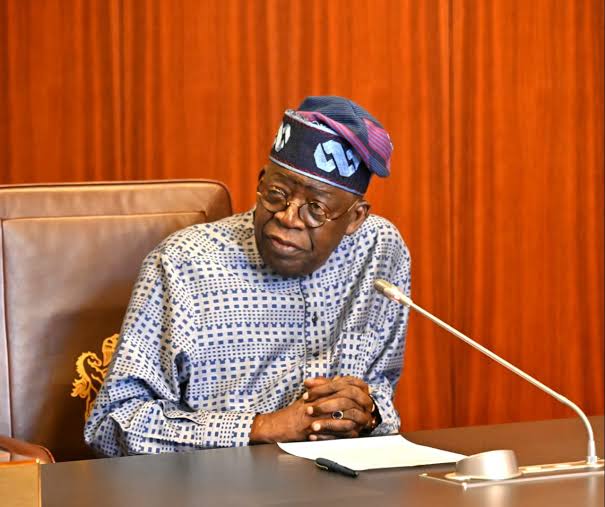
Not defeated, but exhausted and determined to revisit the issue another day, I reluctantly agreed to obtain the visa in my American passport as requested. To my surprise and honor, the following day, during her opening address at Biashara Afrika, Minister Oduwole spoke publicly about what she had witnessed at the airport the night before. Addressing an audience that included current and former heads of state — among them the President of Togo — as well as dignitaries and business leaders, she emphasized the importance of African unity and how it begins with the way Africans treat one another at their borders.
The audience reacted intensely, with audible gasps throughout the room. Most importantly, the issue captured the full attention of President Faure Gnassingbé, who later announced during his own address that Togo would become visa-free for all Africans, making it the sixth African country to adopt such a policy.
While I welcome this important development, one that advances both the intra-African trade goals of the AfCFTA and the broader vision of the African Union, it does not fully address what happened to me, nor what I have since learned has happened to countless others across the continent: Africans being denied entry with their African passports simply because they traveled from outside the continent or hold dual citizenship with non-African countries.
As a Black American born and raised in the United States, whose lifelong dream was to “make it back home” to Africa, earning diasporan citizenship in Ghana was profoundly meaningful to me. And I was honored that Ghana gave me the opportunity and privilege to become a citizen. I consider myself deeply Pan-African, and I was especially disheartened to be forced to enter the continent as an American rather than as an African. Becoming African by citizenship was something I worked hard toward and take immense pride in. There are plenty of diasporans like myself — Africans born outside the continent — who are recognized by the African Union as the “sixth region” of Africa. And at a time when African nations should be encouraging a “brain gain” from the diaspora and welcoming us home, too many of us are instead being penalized for where we were born or where we once lived.
Like the father and first president of my beloved Ghana, Osagyefo Dr. Kwame Nkrumah, once said, “It is clear that we must find an African solution to our problems, and that this can only be found in African unity.”
And as Minister Oduwole so powerfully stated in the speech that instantly shifted the mind of a president, African unity begins with how we treat one another at our borders — borders that many of us hopes to one day cease to exist at all.


.png)
Stay informed with the latest African media trends, job opportunities, and development news. Connecting Africa with global media and development partners.
.jpeg)
.png)

.avif)

.jpeg)