
.png)


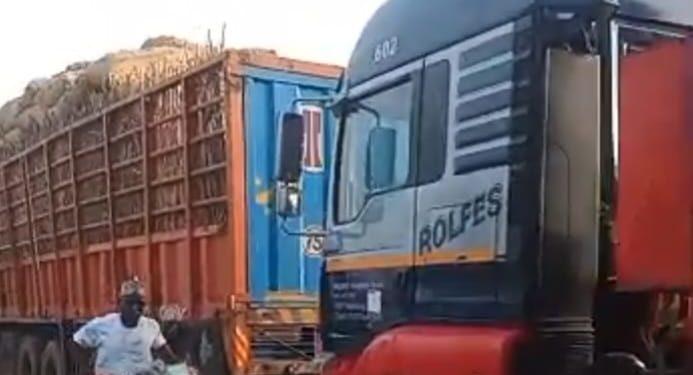
What appears, on the surface, to be a localized dispute at the Adjen Kotoku onion market in Accra is, in reality, the visible edge of a broader economic tension between Ghana and Nigeria.
The clash, involving traders and transporters within one of the country’s key onion distribution hubs, did not emerge in isolation. It reflects mounting pressure within regional trade systems that are increasingly strained by policy friction, currency instability, and competition over supply chains.
Adjen Kotoku is not just a market. It is a node in a wider West African food distribution network. When disruption occurs here, it signals stress across the system.
At the official level, Ghana and Nigeria remain committed to regional integration under the Economic Community of West African States and the African Continental Free Trade Area.
In practice, however, trade tensions between both countries have persisted for years, often surfacing through:
What is now unfolding in Adjen Kotoku suggests that these tensions are no longer contained within policy discussions or diplomatic channels. They are spilling directly into informal markets where most cross-border trade actually happens.

4
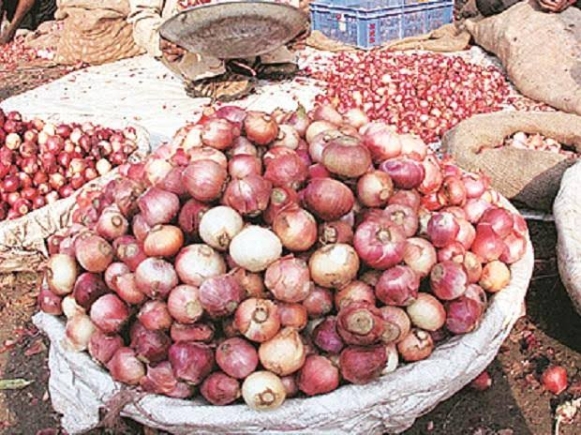
Onions may seem like a minor commodity. They are not.
They are a staple across West African diets and a critical component of everyday consumption. Their supply chain stretches across multiple countries, with significant volumes moving through Sahelian corridors into coastal markets such as Accra and Lagos.
The system is highly informal, relationship-driven, and sensitive to disruption.
When access, pricing, or control over distribution is contested, tensions can escalate quickly, particularly in high-volume hubs like Adjen Kotoku.
Underlying the immediate dispute is a deeper economic reality.
Currency volatility across the region has altered trade dynamics. Differences in exchange rates affect:
In this environment, traders are not only competing over goods. They are competing over survival within tightening economic conditions.
What might appear as a market disagreement is often the surface expression of these pressures.
A significant share of intra-African trade operates outside formal structures.
Despite frameworks like AfCFTA, the daily movement of goods is still governed by:
This creates a system that is flexible, but also fragile.
When disputes arise, there are limited mechanisms for structured resolution. As a result, tensions can escalate rapidly, sometimes turning into confrontations that disrupt supply chains and affect prices beyond the market itself.
The events at Adjen Kotoku should not be read as a standalone clash.
They point to a broader pattern:
Regional integration is advancing at the policy level, but fragmentation persists on the ground.
Until these two layers align, similar incidents are likely to recur, particularly in sectors where informal trade dominates and economic pressures remain high.
The core issue is not onions.
It is whether West Africa’s trade systems can absorb pressure without breaking at their weakest points.
Markets like Adjen Kotoku are where policy meets reality. And increasingly, they are where the gaps become visible.


.png)
Stay informed with the latest African media trends, job opportunities, and development news. Connecting Africa with global media and development partners.
.png)
)%20(1).jpg)





.avif)
.avif)

.avif)
.png)