.png)


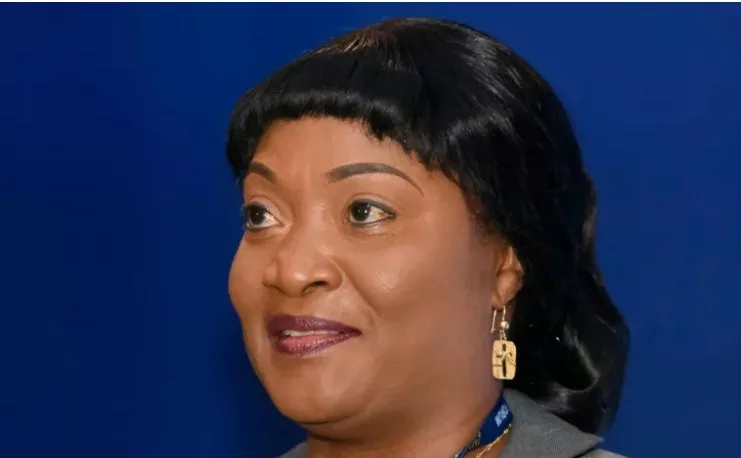
Yanar Mohammed was 65 years old when she was killed outside her Baghdad home on March 2, 2026. She had spent the preceding three decades building the Organisation of Women's Freedom in Iraq, establishing the country's first women's shelters, creating a national network of safe houses for survivors of gender-based violence and trafficking, and campaigning consistently against honour crimes in a legal environment that has historically tolerated them. On June 10, 2026, the organisations she was affiliated with internationally, the Hurra Coalition and Equality Now, marked 100 days since her killing with a public statement noting that no one has been charged.
The failure to prosecute is not merely a procedural delay. In an interview recorded before her death, Mohammed described the Iraqi state as operating under policies that were, in her assessment, based on religion, patriarchal, tribal, and explicitly dismissive of women's rights. The government, she said, allows an agenda that preaches hatred of women, permits polygamy, allows honour killings, and treats child marriage as an everyday occurrence. That is a description not of a state that lacks the capacity to protect women's rights defenders but of one that has made structural choices about whose rights are worth protecting.
The killing happened at a moment when those structural conditions were producing documented consequences. In May 2026, weeks after Mohammed's assassination, 15-year-old Kawthar Bashar al-Husayjawi was killed in Baghdad after resisting a forced marriage to an older cousin. According to a female relative's account published in The Guardian, Kawthar had already survived one abusive child marriage, obtained a divorce in late 2025, and was subsequently pressured into another unwanted union. She was reportedly shot ten times by her father, uncle, and cousin. An unverified video circulating online reportedly showed family members celebrating. No charges were publicly reported in that case either.
The pattern these cases describe is not coincidence. It is the operation of a system that assigns different value to women's lives and to the lives of those who defend them. Honour crime provisions in Iraqi law and practice have historically offered leniency to perpetrators who claim family honour as justification. Yanar Mohammed's OWFI documented and challenged these provisions for three decades. The fact that the organisation continued operating in this environment, despite documented risks to its leadership, reflects both the severity of the need it was addressing and the degree of personal risk its founder accepted.
The Hurra Coalition and Equality Now are calling on the Government of Iraq to conduct a prompt, thorough, and independent investigation into Mohammed's killing, to identify and prosecute all those responsible, and to take immediate steps to protect other women human rights defenders. These are the appropriate demands. They are also demands that the Iraqi government has faced in comparable cases before and has not met at the level required to change the underlying incentives of perpetrators.
What is not said in the advocacy statements, and what the available evidence supports, is that accountability for Yanar Mohammed's murder would require confronting not just the individuals who pulled the trigger but the political and legal infrastructure that created the conditions for her targeting. Reforming honour crime provisions, enforcing protections for human rights defenders, and prosecuting violence against women systematically are not administrative decisions. They require shifting political coalitions in a parliament where conservative religious and tribal interests have consistently blocked such reforms.
Mohammed's legacy is the network of safe houses and shelter services that OWFI built across Iraq, which continues to operate. That infrastructure was built by a woman who knew she was working in a hostile environment and chose to build it anyway. The question her assassination poses to the international community and to the Iraqi government is not only whether justice will be served for her specifically. It is whether the conditions that required her work to exist in the first place will be changed. After 100 days without charges, the answer to the second question appears to be no.


.png)
Stay informed with the latest African media trends, job opportunities, and development news. Connecting Africa with global media and development partners.

.avif)


.jpeg)