
.png)


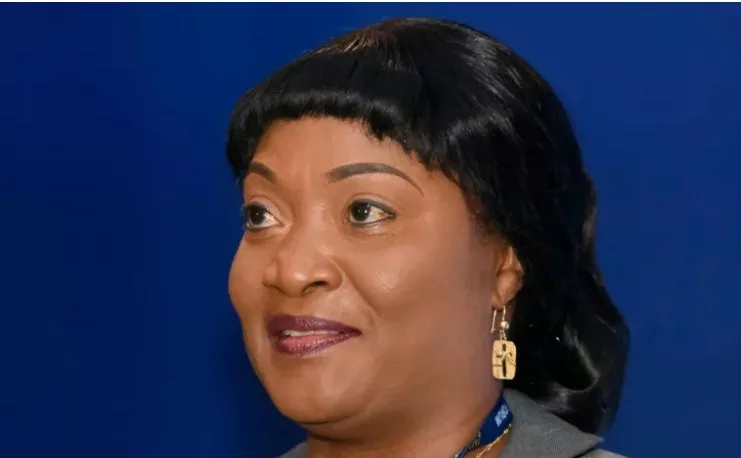
The Republic of Seychelles announced on 14 June 2026 that President Dr. Patrick Herminie had travelled to the United Arab Emirates on a private visit for two days, with a return expected on 17 June. During his absence, Vice President Sebastian Pillay was designated to oversee the duties and responsibilities of the Office of the President. The statement from State House offered no further detail on the purpose of the visit.
Private visits by heads of state are a legitimate category of executive travel, and the official designation distinguishes them from state visits, which carry formal protocol, or working visits, which involve structured meetings with counterpart governments. But the distinction between private and official is rarely clean at the presidential level. A head of state travelling to the UAE, a major sovereign wealth holder and one of the world's most active investment destinations, does so within a context that is inherently consequential regardless of the official label. The absence of an agenda from the Seychelles State House statement is itself informative: it leaves open a wide range of possible purposes, from personal medical care to private investment discussions to informal diplomatic contact, without requiring public accountability for any of them.
Seychelles is a small island economy of approximately 100,000 people. Its economic model rests heavily on tourism, which accounts for a substantial share of GDP, and on financial services. Both sectors are subject to external shocks beyond the government's control. The COVID-19 pandemic, which virtually eliminated international tourism between 2020 and 2022, caused significant economic contraction. Climate change presents a longer-term structural threat: rising sea levels, coral bleaching, and intensifying weather events affect both the natural environment that underpins tourism and the physical infrastructure of islands with limited elevation. These vulnerabilities create a persistent need for external financing partnerships to supplement domestic fiscal capacity.
The UAE is an increasingly significant partner for small African and Indian Ocean states precisely because it offers a relationship that larger multilateral institutions cannot easily replicate. Emirati sovereign wealth funds and investment vehicles move at commercial speed, without the conditionality frameworks that accompany World Bank or IMF lending. For a small island government managing short-term fiscal pressures or seeking investment in specific infrastructure, the UAE offers accessible capital and a willingness to engage on a bilateral basis that is attractive. The Gulf's growing infrastructure of free zones, investment holding companies, and development-oriented sovereign vehicles has made it a preferred partner for many small and medium-sized African economies.
Seychelles has also benefited from its strategic location in the Indian Ocean, which gives it relevance to maritime security conversations and to debates about influence in a region contested between major powers. China has investment presence across Indian Ocean island states. The United States maintains interest in the region through its partnership with Diego Garcia. India, which borders the Indian Ocean more directly, has deepened its relationships with Mauritius, Maldives, and Seychelles. The UAE's own Indian Ocean interests intersect with these dynamics, and a presidential visit, private or not, occurs within this competitive context.
What the visit to the UAE means in concrete terms will not be disclosed through the State House statement. It may involve nothing more significant than personal rest and private business. It may involve preliminary conversations about investment, infrastructure financing, or diplomatic positioning that will eventually become visible through subsequent announcements. The mechanism of the private visit allows a head of state to engage without committing to a public agenda, which is useful when the conversations being had are exploratory rather than concluded.
The designation of the Vice President to manage presidential duties during the absence is constitutionally standard and practically unremarkable. The significant fact remains the destination. For a president of a 100,000-person island state to travel to the UAE, rather than to a regional capital, a multilateral forum, or a traditional partner country, reflects the direction in which African small states are orienting their external relationships, toward Gulf capitals with capital to deploy and fewer questions to ask.


.png)
Stay informed with the latest African media trends, job opportunities, and development news. Connecting Africa with global media and development partners.
.jpeg)
.png)

.avif)
.avif)