
.png)


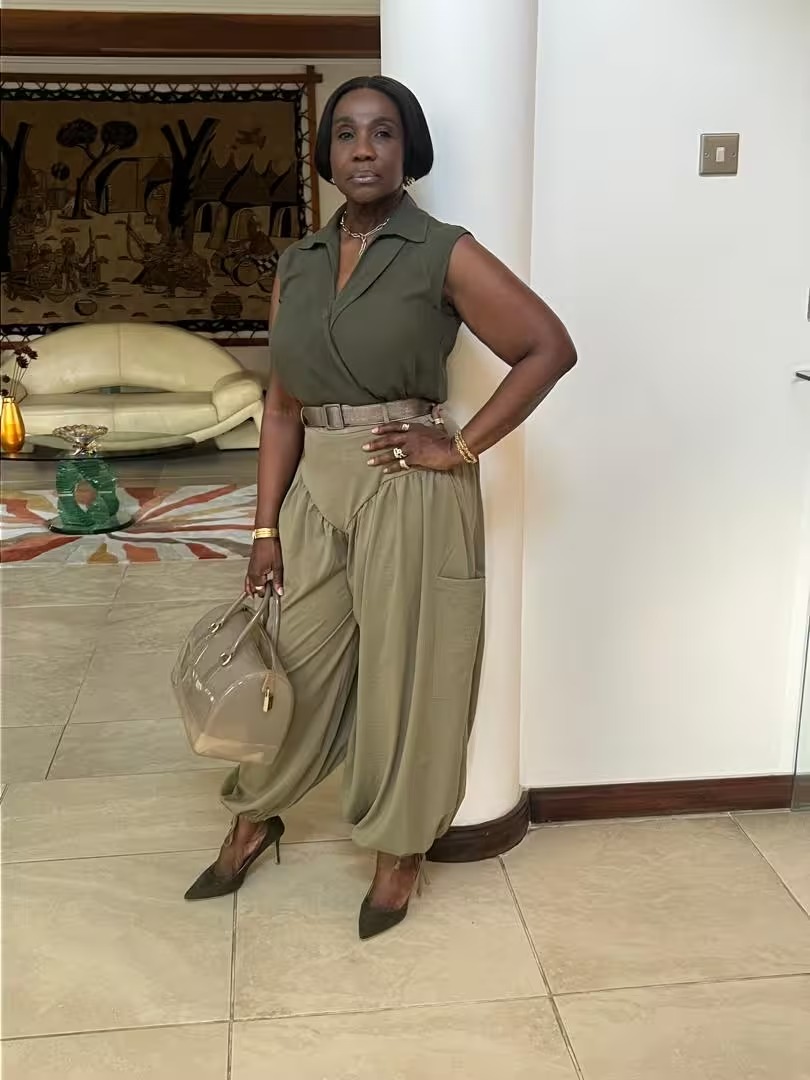
At 65, Ama Bentsi-Enchill Duncan walks into a room in bright colours and high heels with the quiet confidence of someone who no longer asks permission to be seen.
It is difficult to imagine that this same woman once struggled to speak up.
“I was very timid,” she says without hesitation. “I lacked confidence, self-esteem and self-worth.”
Today, thousands of people follow her online, waiting to see what she wears next. Young women stop her in public. Fashion brands seek collaborations. Her Instagram content reaches audiences decades younger than she is.
But reducing Ama Duncan to a fashion influencer misses the point entirely.
Her story is not about clothes.
It is about visibility.
It is about who African society allows to remain visible—and who quietly disappears.
More importantly, it is about an economy that may have overlooked one of its most valuable consumer groups.
There is an unwritten rule across much of Africa.
Children are celebrated.
Youth is admired.
Middle age is respected.
Old age is expected to become invisible.
Particularly for women.
Walk through shopping malls in Accra, Nairobi, Lagos or Johannesburg and the pattern is difficult to miss.
Luxury fashion campaigns feature women in their twenties.
.jpeg)
Beauty advertisements rarely acknowledge anyone beyond middle age.
Lifestyle brands celebrate youth as though it were the only season worth marketing.
Meanwhile, millions of older women continue to buy clothes, attend weddings, travel, build businesses, support families, raise grandchildren, lead organisations and influence household purchasing decisions.
Yet they remain almost absent from the continent’s visual imagination.
Ama Duncan noticed that absence long before many marketers did.
“I don’t see many brands using women my age,” she says. “And I think that’s such a missed opportunity.”
Her criticism is not merely emotional.
It is commercial.
“I don’t think brands realise how financially negative it could be to the profitability of their businesses.”
She questions why fashion is repeatedly presented through younger women when older consumers are also buying, wearing and styling those same products.
“You show clothes on women who are thirty or forty. Why not show us how we can wear them? How we can style them?”
Her observation reaches beyond fashion.
Across the world, economists and policymakers increasingly discuss the silver economy—the economic activity generated by older people through consumption, employment, entrepreneurship, investment and accumulated wealth.
Africa remains the world’s youngest continent, but it is ageing too. Longer life expectancy and changing family structures mean more Africans are living active and productive lives beyond conventional retirement age.
Many continue earning incomes, supporting extended families and making major household purchasing decisions.
Yet much of the continent’s advertising behaves as though life—and consumption—ends at 60.
Ama sees something different.
“We’re an excluded market.”
Those four words contain both a cultural criticism and a business warning.
The confidence people now associate with Ama Duncan did not arrive alongside professional success.
It came much later.
For decades, she built a corporate career spanning governance, banking, investments, leadership and board advisory work.
Ironically, the woman who would later become comfortable appearing before thousands online spent much of her earlier life questioning herself.
“I’ve always lacked confidence and self-esteem.”
Corporate life became her training ground.
Every promotion required more courage.
Every boardroom demanded that she speak with greater authority.
Every leadership responsibility pushed her beyond the limits of what felt comfortable.
“You are forced to push boundaries,” she says.
Looking back, Ama believes it was during the latter years of her corporate career, particularly while working with boards and senior executives, that she began to recognise her own authority.
Not because she changed overnight.
Because confidence had been quietly accumulating for decades.
“I am still building it.”
That admission challenges the common idea that confidence is something people either possess or lack.
Her life suggests that confidence can be constructed through experience, exposure and repeated acts of courage.
Ask Ama when fashion became important to her and she laughs.
“It always has been.”
Even within the formal dress codes of corporate life, she found subtle ways to express herself.
A distinctive accessory.
A carefully chosen silhouette.
A slight elevation of the expected office uniform.
Fashion did not suddenly enter her life after retirement.
Freedom did.
Leaving corporate life gave her greater space to express what had always been present.
“As my confidence grew, fashion became another way of expressing myself.”
That distinction matters.
She is not simply displaying clothing.
She is demonstrating possibility.
Starting an Instagram platform at 65 in a conservative African society required courage.
Not because of the technology.
Because of the judgement.
The strongest criticism did not come from strangers.
It came from people close to her.
“What are you doing?”
“Is it just a fashion show?”
“Is everything all right?”
Some even wondered whether her new public visibility meant that something had gone wrong in her personal life.
For an older African woman, visibility appeared to require an explanation.
“It was brutal,” Ama recalls.
But she continued.
Not because she wanted attention for its own sake.
Because she had a strategy.
She wanted to build a platform around age representation, personal style and the belief that women do not stop being culturally relevant when they grow older.
The question she asked herself was simple:
“If not now, when?”
One of the greatest surprises has been the composition of her audience.
Ama expected women closer to her age.
Instead, many of her followers are millennials and members of Generation Z.
A 27-year-old woman recently approached her in public.
“Auntie, I follow you,” the young woman told her.
Ama was puzzled.
“What are you doing following a 65-year-old woman?”
The answer stayed with her.
“You inspire me.”
Other younger followers tell her that seeing her online makes their own futures appear brighter.
Perhaps that is the greatest compliment her platform has produced.
Not that she dresses well.
But that she changes how younger women imagine ageing.
For generations, retirement in many African societies carried an unspoken expectation.
Withdraw.
Rest.
Become less visible.
Ama rejects that script.
At 65, she has begun what many would consider an entirely new career.
She is proof that retirement can become reinvention.
“I want women to know that 60 cannot be the end.”
She believes older adults should continue investing in their health, relationships, knowledge, creativity and economic lives.
Not because they are chasing youth.
Because purpose does not have an expiry date.
For many women, the years after formal employment may be the first period in which careers, children and social expectations no longer consume every part of their identity.
The question then becomes not whether life is ending, but what new life can be built.
Ama’s growing platform has created commercial opportunities.
Brands have approached her to showcase products, while she has also sought collaborations with designers whose work she believes deserves attention.
But she is not interested only in famous labels.
She is particularly drawn to emerging African designers.
“If a piece is good enough and attractive, and I feel I can style it, I want to promote that emerging designer.”
Her approach reveals another part of her philosophy.
Visibility should not only be extended to older women.
It should also be extended to younger designers and businesses trying to enter crowded markets.
Her platform therefore operates at the meeting point of representation, mentorship and commerce.
Still, the wider fashion and advertising industries remain slow to respond.
Campaigns continue to present older women as an exception rather than a meaningful consumer segment.
This is not simply a failure of inclusion.
It may be a failure of market intelligence.
Towards the end of our conversation, we ask Ama to define style.
She pauses before answering.
“Style introduces you before you actually speak.”
It is a sentence that reveals more than a philosophy of clothing.
For Ama, style is communication.
Identity.
Presence.
Permission.
It announces that she refuses to disappear because society has decided that a woman of her age should become quieter.
Her wardrobe may be the most visible part of her platform, but the deeper message is not about what women should wear.
It is about what women should continue allowing themselves to become.
Ama Duncan’s story should not only inspire fashion enthusiasts.
It should challenge boardrooms.
Marketing departments.
Advertising agencies.
Retail executives.
Financial institutions.
Travel companies.
Property developers.
Healthcare businesses.
Technology platforms.
For decades, African companies have competed aggressively for younger consumers while paying comparatively little attention to older women with purchasing power, experience and influence.
The irony is difficult to ignore.
Many of the women excluded from advertising are the same people making purchasing decisions for households, children, grandchildren and extended families.
They may be buying property.
Funding education.
Selecting financial products.
Paying for healthcare.
Travelling.
Supporting new businesses.
Purchasing fashion and beauty products.
In chasing youth, brands may have overlooked loyalty.
In celebrating aspiration, they may have ignored accumulated value.
The result is more than a representation gap.
It is a commercial blind spot.
When Ama Duncan posts another photograph online, most people will probably notice the colours, tailoring or elegance.
They may admire the outfit.
Few will notice the quiet argument contained within every image.
It is an argument against invisibility.
An argument that confidence can arrive later in life.
.jpeg)
That reinvention has no deadline.
That purpose is not reserved for youth.
And that perhaps one of Africa’s most overlooked markets is not waiting to be discovered.
It has simply been waiting to be seen.


.png)
Stay informed with the latest African media trends, job opportunities, and development news. Connecting Africa with global media and development partners.
.png)
%20(1).avif)

)%20(1).png)


.avif)

.avif)


.png)