.png)


There are numbers that make headlines.
Then there are numbers that force a nation to look in the mirror.
Ghana recorded **15,290 new HIV infections** in 2024.
At first glance, it appears to be another annual health statistic—another report to be discussed for a few days before the country moves on.
But hidden inside those figures is a pattern that should concern every parent, every teacher, every policymaker and every young Ghanaian.
The virus is not spreading evenly.
It is finding one group more than any other.
And that raises a question far bigger than HIV itself.
What is happening to Ghana's young women?
Every epidemic leaves clues.
The first clue is where infections are rising.
The second is who is becoming infected.
The third—and often the most important—is why.
In Ghana's latest HIV estimates, women account for nearly seven out of every ten people living with HIV.
That is already alarming.
But the data becomes even more striking when we narrow the focus to young people.
Among Ghanaians aged 15 to 24, young women account for more than **eight out of every ten new HIV infections**.
Read that again.
More than eighty percent.
This is no statistical coincidence.
It is a signal.
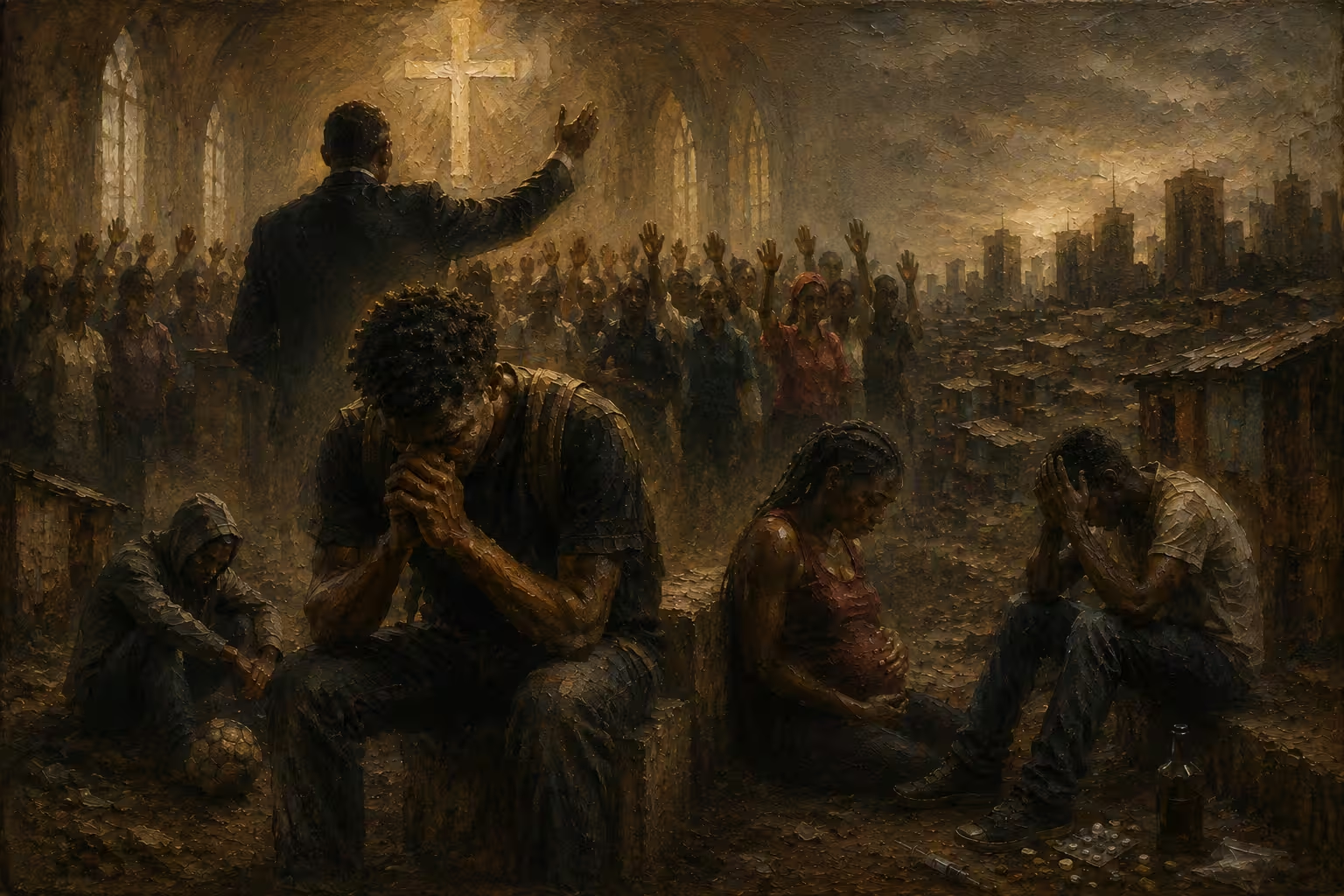
When one section of society consistently carries the greatest burden, the issue is no longer simply medical.
It becomes structural.
Why are young women so much more vulnerable?
Is it because they lack information?
Is it because poverty pushes some into relationships where they have less power to negotiate safer choices?
Is it because many young people still struggle to access youth-friendly health services without fear of stigma?
Is it because conversations about relationships, consent and sexual health are often avoided until it is too late?
Or is it all of these at once?
The data alone cannot answer every question.
But it tells us where we should be looking.
For years, HIV has been treated primarily as a public health issue.
It is.
But it is also becoming a measure of how well a society protects its young people.
When large numbers of young women continue to be infected, HIV becomes more than a virus.
It becomes evidence of vulnerability.
It reflects inequalities that exist long before someone enters a clinic.
It exposes the places where education, healthcare, economic opportunity and social protection are not reaching everyone equally.
There is another side to Ghana's HIV response.
One that deserves recognition.
The country has achieved remarkable success in preventing mothers from transmitting HIV to their babies.
Coverage reached **99.3 percent** in 2024.
That achievement proves something important.
When Ghana concentrates resources, builds partnerships and stays committed, lives are saved.
So this raises another difficult question.
If we know how to protect newborn babies, can we bring the same determination to protecting adolescent girls before they become patients?
The report also shows Ghana remains below the global **95-95-95** HIV targets.
Many people living with HIV still do not know their status.
Many who know are still not receiving treatment.
Yet among those who do receive treatment, viral suppression is high.
That tells us something hopeful.
Treatment works.
The challenge is getting more people into care early enough.
Statistics are often described as cold.
But there is nothing cold about these numbers.
Every figure represents someone whose plans changed.
Someone who still wanted to finish school.
Someone who hoped to start a business.
Someone who dreamed of becoming a doctor, teacher, engineer or entrepreneur.
Every preventable infection is also a loss of human potential.
That is why this story is not simply about HIV.
It is about the future of Ghana's young women.
And perhaps the most important question the report leaves us with is this:
Will we continue reacting to HIV after infection, or will we invest much earlier in the conditions that help young people remain healthy, informed and empowered in the first place?
Because by the time HIV appears in the statistics, the real story has already begun years earlier.


.png)
Stay informed with the latest African media trends, job opportunities, and development news. Connecting Africa with global media and development partners.
.avif)