.png)


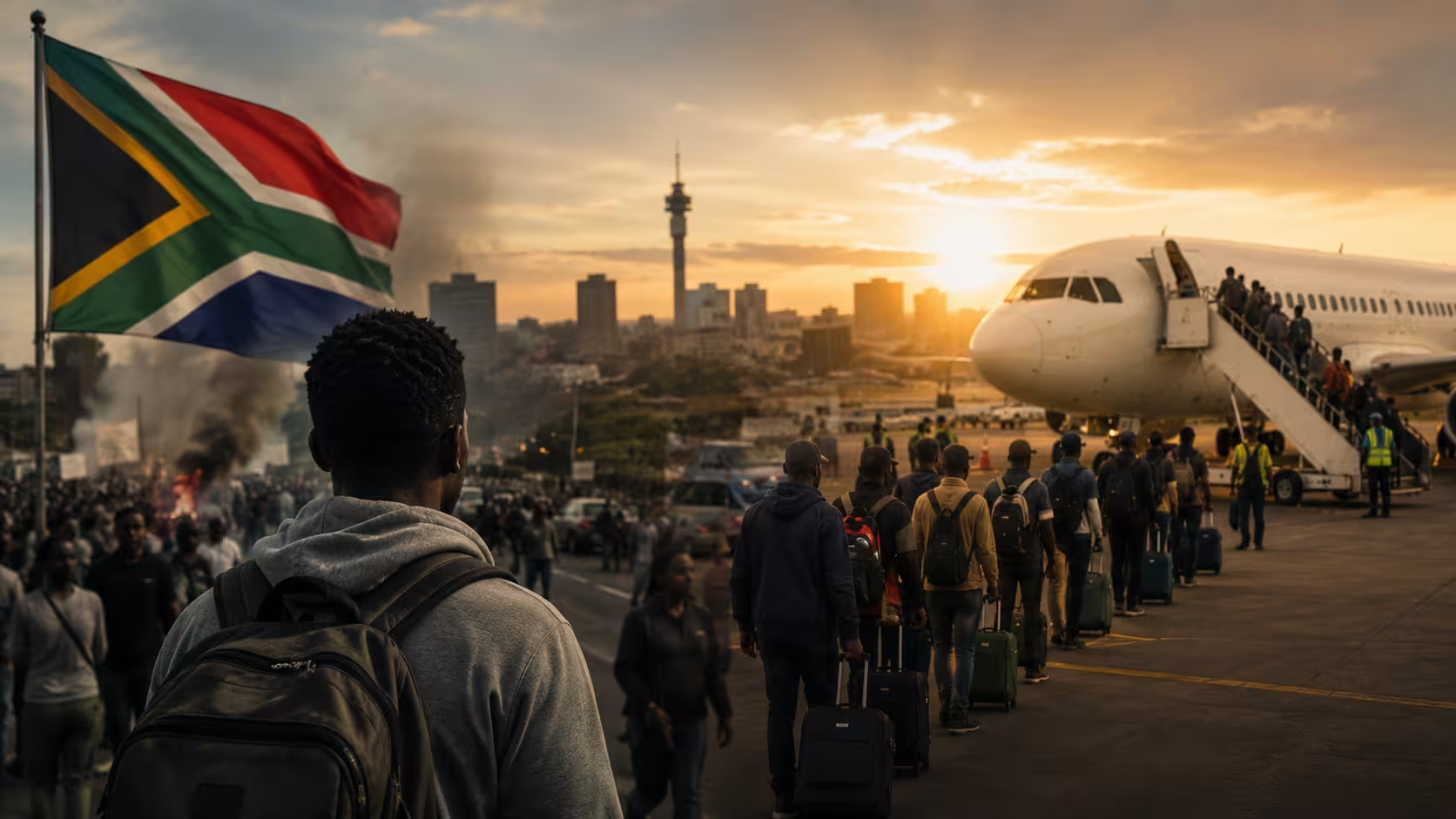
More Africans are leaving South Africa as anti migrant tensions deepen. The bigger question is what this means for a continent that says it wants to trade, move and grow together.
South Africa has for many years been one of the biggest destinations for African migrants. People from Zimbabwe, Mozambique, Malawi, the Democratic Republic of Congo, Nigeria, Ghana, Somalia and several other countries have moved there in search of work, education, safety and better opportunities.
That is why the latest wave of anti migrant tension should concern the whole continent.
Recent clashes in Durban have again brought the issue to the surface. Foreign nationals camped outside a Home Affairs office were confronted by anti migrant protesters and police had to intervene. Some people were injured, including children. Beyond that incident, several African governments have been helping their citizens return home as concerns about safety continue.
This is no longer only a South African immigration story.
It is becoming an African story.
South Africa has serious economic difficulties. Unemployment remains high. Inequality is severe. Many communities are under pressure. Public services are stretched and crime remains a major concern.
These are real issues and South Africans are right to demand answers from their government.
But blaming migrants will not solve them.
If every foreign national left South Africa tomorrow, the country would still have to deal with unemployment, poor service delivery, inequality, crime and weak economic growth.
These are structural problems that require policy, investment, competent administration and political leadership.
Immigration also has to be managed properly.
Every country has the right to enforce its laws and protect its borders. People who are in South Africa illegally should be dealt with through the law. Employers who exploit undocumented workers should also be held accountable.
What should not happen is for ordinary citizens or organised groups to take the law into their own hands.
Once people begin deciding who has the right to live in a community, run a shop or access a public service, the situation can easily move from protest into intimidation and violence.
That is where the danger lies.
South Africa has to be careful because this issue is beginning to affect its relationship with the rest of the continent.
Ghana has evacuated citizens.
Other African countries have also organised repatriation.
Refugees and asylum seekers from countries such as the Democratic Republic of Congo and Burundi say they are afraid to return to some communities.
For a country that remains one of Africa’s most important economies, this is not a small matter.
The wider concern is what this means for African integration.
The continent is promoting the African Continental Free Trade Area and talking about one African market.
Governments want goods, services, capital and businesses to move more freely across borders.
But economic integration will be difficult if Africans themselves do not feel safe moving across African countries.
Trade moves with people.
Businesses move with people.
Skills move with people.
Investment moves with people.
Africa cannot build a serious continental market while migration continues to be treated mainly as a threat.
This does not mean borders should disappear or that countries should stop enforcing immigration laws.
It means the continent needs better systems for legal migration, work permits, regional labour movement and refugee protection.
South Africa is only the most visible example of a problem that many African countries may face in the coming years.
As populations grow, jobs remain scarce and conflict displaces more people, migration across African borders is likely to increase.
Climate pressures will also push more people to move in search of water, work and safer communities.
Governments therefore have to prepare for this reality.
The answer cannot be to wait until frustration turns into violence.
South Africa also carries a special responsibility because of its history.
During the struggle against apartheid, many African countries supported South Africans politically and materially. Ghana, Zambia, Tanzania, Nigeria and others played important roles in supporting the liberation struggle.
That history should not be used to suggest that South Africa must accept uncontrolled migration.
It should, however, remind the country that African solidarity has always mattered.
Today, the challenge is to find a balance between protecting South African citizens and protecting the dignity and safety of migrants.
Both can be done.
A serious government should be able to enforce immigration laws without allowing xenophobia to grow.
A serious political system should be able to debate migration without turning foreigners into easy targets.
A serious continent should be able to promote integration while also addressing the pressures that come with movement across borders.
The most troubling part of the current situation is that many migrants are becoming symbols for problems they did not create.
Foreigners did not create South Africa’s unemployment crisis.
They did not create the housing shortage.
They did not create weak municipal services.
They did not create inequality.
They did not create decades of poor economic growth.
These are problems that South Africa must solve for itself.
The attacks and intimidation may force some migrants to leave, but they will not fix the economy.
That is why the reported departure of more than 200,000 people during the wider period of unrest should be taken seriously.
It should not only be seen as a migration statistic.
It should be seen as a warning.
Africa is trying to become more integrated economically, but that ambition will remain incomplete if Africans continue to fear moving to other African countries.
The continent has spent years discussing how to remove barriers to trade.
It may now have to confront a more difficult question.
How do we remove the barriers growing between Africans themselves?


.png)
Stay informed with the latest African media trends, job opportunities, and development news. Connecting Africa with global media and development partners.

.webp)