.png)


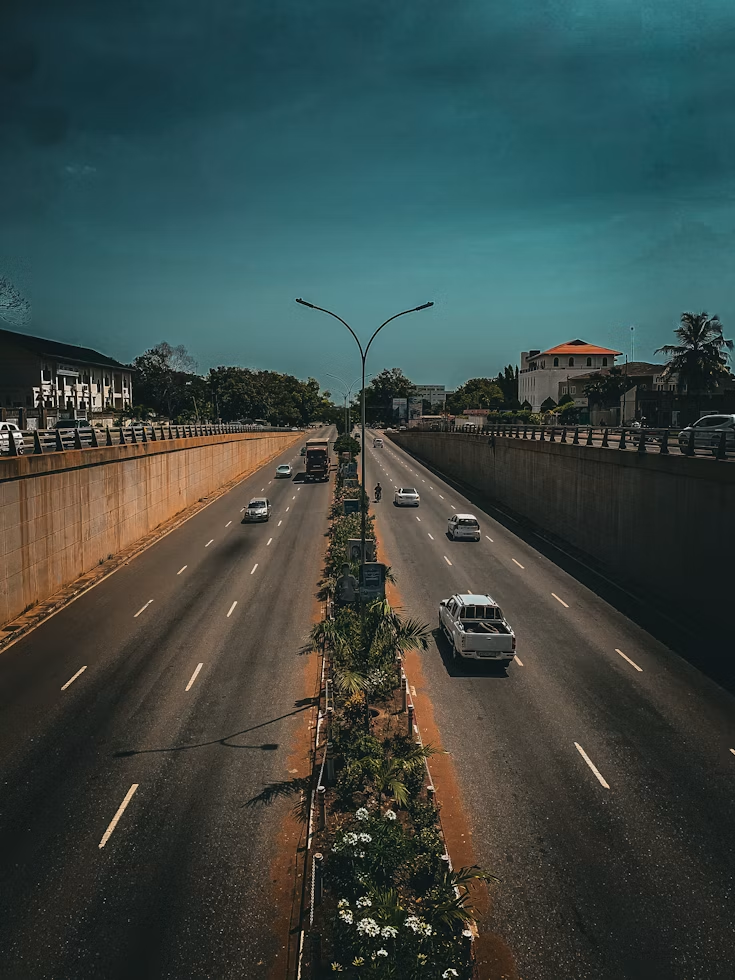
On a typical afternoon in Accra, sachet water moves through traffic as predictably as the cars themselves. It is cheap, portable, and everywhere. For millions, it is the most reliable way to access drinking water during the day.
But recently, something has shifted.
The price is no longer stable. What used to cost 20 pesewas now sells for 30 or more in many areas. The increase feels small, but it is consistent. And more importantly, it is persistent.
This is often explained as inflation.
But that explanation is incomplete.
Sachet water is not just water. It is water packaged in plastic.
That plastic is made from Polyethylene — a material derived from crude oil.
The journey is long and mostly invisible:
By the time it reaches the street, the water is local.
But the packaging is global.
In most sachet water production, plastic accounts for up to 40–60% of total cost.
Water itself is inexpensive to source and treat. The real expense lies in:
This creates a simple but powerful reality:
Consumers are buying water.
But they are paying for packaging.
This is where the system reveals itself.
When global oil prices rise, the cost of polyethylene rises.
When the cedi weakens, imported plastic becomes more expensive.
When shipping costs increase, packaging costs follow.
Producers respond by adjusting prices.
Not because they control the market — but because they are exposed to it.
It is important to understand that sachet water producers are not setting these conditions.
They:
They are reacting to cost pressures, not creating them.
The system they operate in determines their pricing behaviour.
What this reveals is a deeper structural issue.
Ghana produces:
But depends on imports for:
This means value is created locally, but pricing power sits externally.
If Ghana developed:
It could:
Prices may not collapse, but they would become more predictable.
Sachet water appears to be the simplest product in the market.
But its pricing tells a more complex story.
It is not just water.
It is a local necessity shaped by a global industrial system.
And until that system changes, the price of water in Ghana will continue to move with forces far beyond the street where it is sold.


.png)
Stay informed with the latest African media trends, job opportunities, and development news. Connecting Africa with global media and development partners.


.png)