.png)


Some companies licensed to purchase artisanal gold under Ghana's new state controlled gold trading system went for as long as three weeks without receiving funds, according to industry sources cited by Reuters.
The delays forced some operators to suspend gold purchases while others borrowed money to continue operating at a time when international gold prices remained elevated.
Five industry sources told Reuters that funding from the Ghana Gold Board, commonly known as GoldBod, had become difficult to access during parts of August.
One trader operating in Ghana's Ashanti Region described the previous two weeks as particularly difficult, saying buyers could spend an entire day waiting without receiving money.
Another GoldBod funded buyer in the Western Region said no funds had been received for about three weeks.
The sources spoke anonymously because they were not authorised to discuss the matter publicly.
GoldBod has rejected suggestions that it is facing a funding shortage.
In a statement issued on Monday, the agency said its gold purchasing programme remained fully funded and operational.
GoldBod said financing is now provided according to the creditworthiness of buyers, security arrangements and broader risk assessments.
The agency also said it had introduced tighter financing controls from August 1 as part of efforts to strengthen the protection of public funds.
Under the new framework, traders seeking financing are expected to satisfy due diligence requirements, enter formal trade financing agreements and provide security guarantees.
GoldBod said two licensed aggregators are currently operating under the trade finance arrangement.
The funding complaints come during a major transition in the way Ghana finances purchases from the artisanal and small scale mining sector.
When GoldBod was established in 2025, purchases of artisanal gold were initially financed by the Bank of Ghana.
The arrangement formed part of Ghana's broader strategy to increase official gold purchases, strengthen foreign exchange reserves, reduce gold smuggling and improve foreign currency inflows.
But the central bank's direct involvement in financing gold purchases became increasingly controversial after losses associated with the programme attracted scrutiny.
The International Monetary Fund subsequently called for an end to direct central bank financing of the gold purchasing operation.
GoldBod has since moved towards financing purchases from its own balance sheet and through alternative funding mechanisms.
Kwaku Ohemeng Amoah, Chief Executive of the Chamber of Gold Buyers, told Reuters that this transition may have contributed to the financing constraints being experienced by some traders.
He said GoldBod's decision to finance the trade from its own balance sheet after separating the arrangement from the Bank of Ghana could have affected the availability of funds.
He also suggested that licensed buyers may increasingly need to secure additional financing independently.
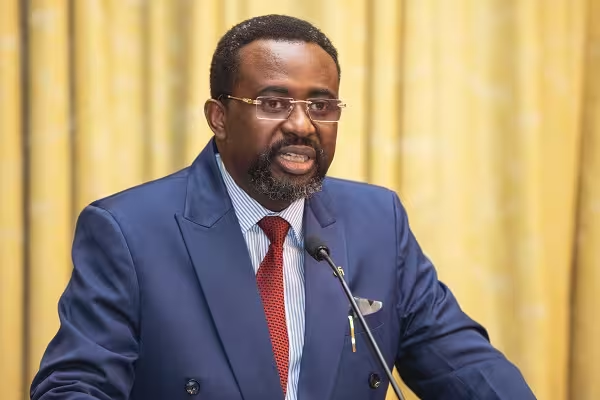
GoldBod Chief Executive Sammy Gyamfi said at a press conference last week that the agency raised nearly $839 million in advances to finance gold purchases between March and May 2026.
The agency has also attempted to raise foreign currency through commercial banks.
On August 3, GoldBod raised approximately $75 million through a foreign exchange auction involving commercial banks.
The programme was subsequently paused for consultations with the Bank of Ghana.
Three banking executives told Reuters that the central bank considered the auction arrangement inconsistent with its operating framework.
The executives said GoldBod and the Bank of Ghana were working to resolve the concerns.
The Bank of Ghana had not responded to Reuters' request for comment at the time of publication.
Fewer than five banks reportedly participated in GoldBod's auction programme.
According to the banking executives, commercial lenders had been more comfortable participating in the gold financing arrangement when the Bank of Ghana provided backing.
That withdrawal has changed the risk profile of the trade.
Commercial banks must now decide how much exposure they are willing to assume in financing a sector that handles large amounts of cash, rapidly changing gold prices and significant operational and compliance risks.
The dispute goes beyond whether individual gold traders received money on time.
GoldBod now sits at the centre of one of Ghana's most important economic reforms.
Ghana is Africa's largest gold producer, and artisanal and small scale mining contributes a significant share of the country's gold output.
For years, however, large volumes of gold from the sector were believed to leave Ghana through unofficial channels.
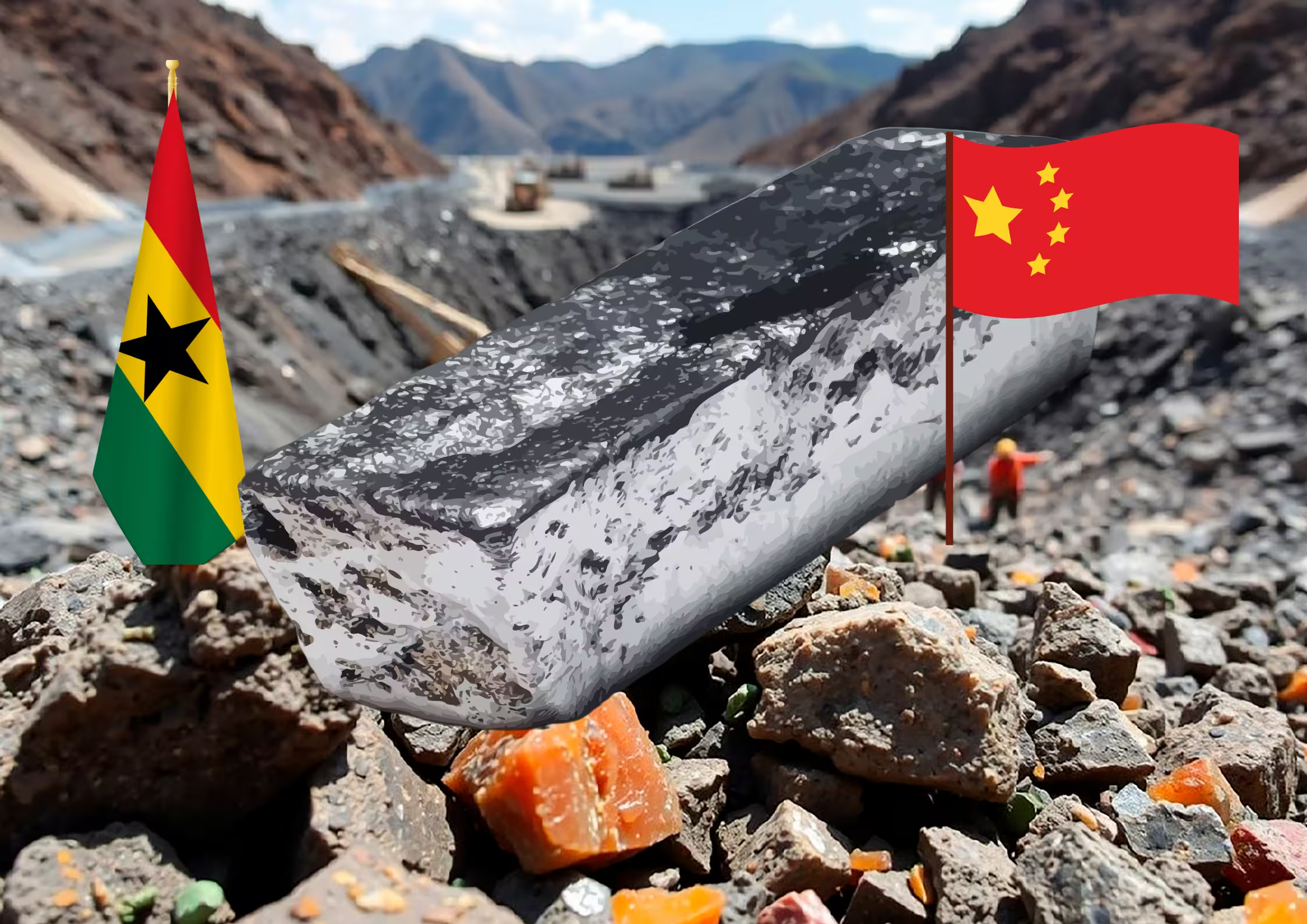
The government created GoldBod with exclusive authority to buy, sell and export artisanal gold in an attempt to bring more of that trade into the formal economy.
The policy is designed to allow the state to capture more foreign exchange from gold exports while reducing smuggling and improving oversight of the sector.
That makes reliable financing critical.
Gold buyers require substantial working capital because they must often pay miners and local suppliers quickly before aggregating the gold for sale into the formal system.
If licensed buyers cannot obtain funds when needed, miners could seek alternative buyers.
In the worst case, prolonged financing constraints could create incentives for parts of the gold trade to return to informal or illegal channels.
It could also place smaller licensed buyers at a disadvantage compared with operators able to obtain private financing.
The current difficulties therefore represent an important test of GoldBod's ability to operate without direct Bank of Ghana financing.
The agency insists that there is no general funding shortage and argues that tighter controls are necessary to manage risk and protect public money.
The experience of some traders suggests that the transition has nevertheless made access to financing more restrictive.
Both positions can be true.
GoldBod can remain adequately capitalised while individual buyers experience delays because financing is no longer distributed automatically or under the same conditions that existed when the central bank supported the programme.
The real question is whether the new financing framework can provide enough liquidity to keep Ghana's artisanal gold market functioning while also limiting the financial risks associated with the previous system.
That balance will be important because the scale of the trade is enormous.
Gold has become increasingly important to Ghana's foreign exchange position, reserve accumulation and broader economic recovery.
Any disruption at the buying stage could therefore have consequences beyond the mining communities where transactions begin.
The creation of GoldBod gave Ghana greater control over the country's artisanal gold supply chain.
The next challenge is proving that the model can finance itself sustainably.
The withdrawal of direct Bank of Ghana financing means GoldBod must increasingly depend on its own balance sheet, commercial banks, trade finance structures and revenues generated from the gold business itself.
That transition could reduce the risks carried by the central bank.
It also means that financing conditions for traders are likely to become more disciplined.
For Ghana, the success of the experiment will depend on whether those controls can be introduced without choking the liquidity required to buy gold from miners.
The latest reports from licensed buyers suggest that this is the pressure point to watch.
GoldBod says the system remains fully funded.
Some traders say they have spent weeks waiting for money.
How quickly those two realities can be reconciled may determine whether Ghana's new gold trading architecture can deliver on its promise of keeping more of the country's gold and foreign exchange within the formal economy.
Source attribution: This report is based primarily on reporting by Maxwell Akalaare Adombila and Emmanuel Bruce for Reuters, published on August 24, 2026 and updated on August 25, 2026.

.png)
Stay informed with the latest African media trends, job opportunities, and development news. Connecting Africa with global media and development partners.
.avif)
).png)
.avif)
)%20(3).jpg)

.avif)
.png)