
.png)


Across much of modern history, Africa has occupied an unusual place in global storytelling. The continent has often been described more than it has been allowed to describe itself. Empires documented it. Foreign media interpreted it. International institutions quantified it. Even optimism about Africa frequently arrived packaged in external language, external metrics, and external expectations. The result has been a continent repeatedly viewed through borrowed lenses, where imagination itself became constrained by inherited narratives.
Yet something profound is beginning to shift.
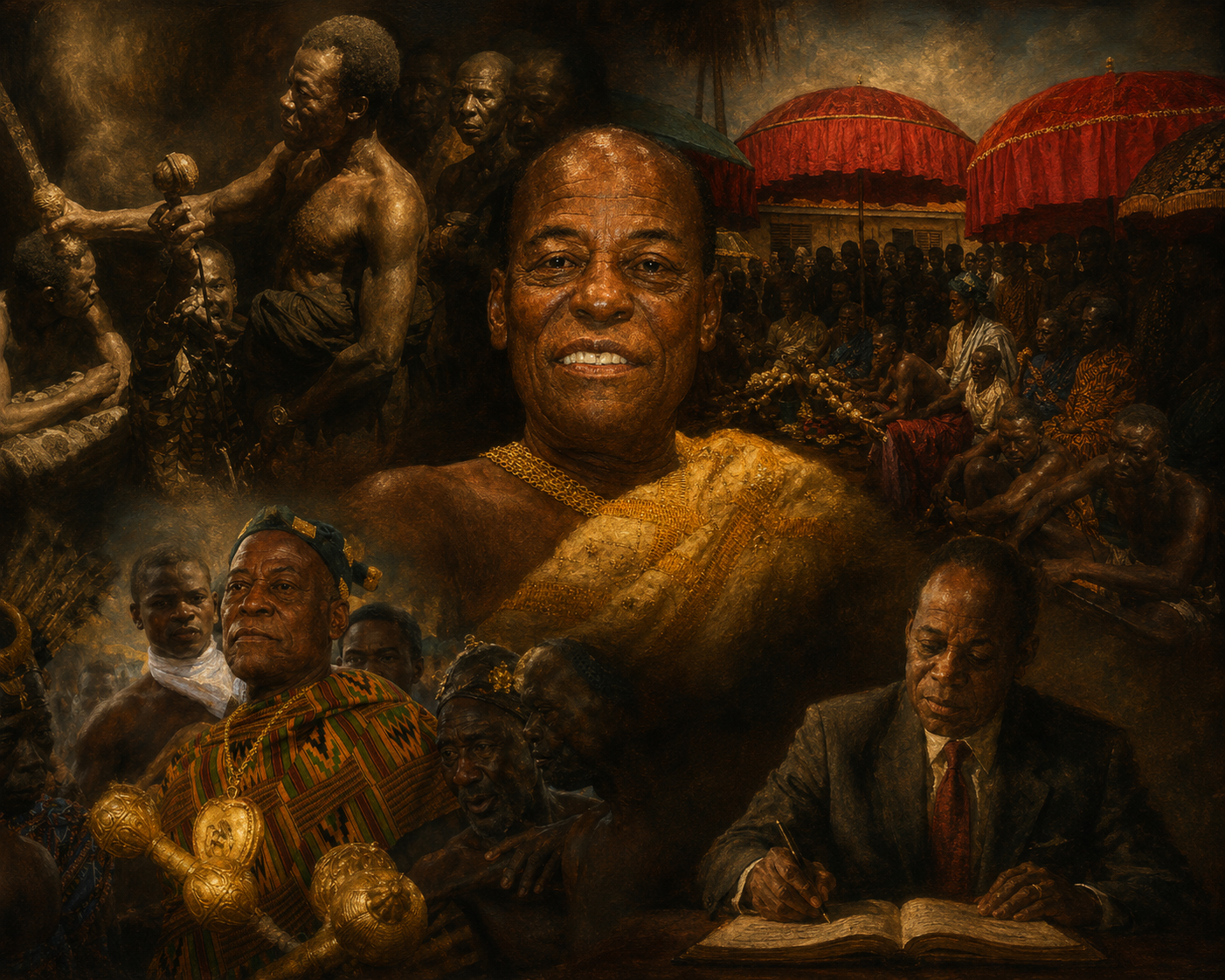
A new generation of African creators is no longer merely responding to global perceptions of Africa. They are constructing entirely new imaginative frameworks through speculative fiction, African futurism, fantasy, science fiction, gaming, animation, digital art, and immersive storytelling. At the center of this creative awakening lies an increasingly powerful concept known as the Afroverse.
The Afroverse is not simply a fictional setting. It is a civilizational thought experiment. It asks what Africa could become if its future were imagined primarily through African philosophies, African aesthetics, African spiritual systems, African scientific traditions, and African ambitions. Instead of placing Africa at the edge of global progress, the Afroverse places it at the center of technological, cultural, and intellectual evolution.
In this world, African cities are not copies of Dubai, London, or New York. They are designed around African climates, African social structures, and indigenous concepts of community. Transportation systems integrate sustainability with local realities. Architecture draws from ancient Nubian, Sahelian, Akan, Swahili, and Ethiopian traditions while embracing advanced engineering. Technology is not disconnected from culture but emerges from it.
The Afroverse challenges one of the most dangerous assumptions inherited from colonial storytelling: that modernity belongs elsewhere and Africa merely catches up.
Speculative fiction becomes the mechanism through which this assumption is dismantled.
Through stories, creators can simulate futures before societies physically build them. They can test political systems, environmental solutions, educational philosophies, technological ethics, and cultural identities inside narrative worlds long before those ideas materialize in reality. This is why speculative fiction has historically mattered in powerful societies. Many technological concepts that shape modern life first existed in fiction before they became scientific goals.
Africa is now beginning to claim that same imaginative authority for itself.
The importance of this cannot be overstated because imagination influences policy, investment, education, innovation, and identity. A society that cannot imagine itself beyond survival often struggles to build beyond survival. But a society that can visualize itself as advanced, sovereign, creative, and globally influential begins to behave differently. It produces different ambitions. Different institutions. Different generations.
This is why the Afroverse is larger than entertainment.
It is psychological infrastructure.
Already, African futurist creators across literature, film, gaming, fashion, animation, and visual arts are building worlds where African languages remain alive centuries into the future, where indigenous knowledge systems coexist with artificial intelligence, where spirituality and science are not enemies, and where African civilizations shape global politics rather than merely reacting to it.
These narratives also reject the false divide between tradition and innovation. For decades, African development conversations often implied that progress required abandoning local identity in favor of imported systems. The Afroverse proposes the opposite. It suggests that Africa’s greatest competitive advantage may emerge from the ability to modernize without cultural erasure.
But building the Afroverse cannot remain the responsibility of artists alone.
Writers may create the stories, but educators determine whether young Africans grow up seeing themselves inside those futures. Technologists determine whether speculative ideas evolve into practical innovation. Architects shape whether African cities reflect imported aesthetics or indigenous realities. Governments influence whether creative industries receive strategic investment or continue to survive on the margins.
Even ordinary citizens participate in this process through smaller acts that collectively shape cultural direction. Supporting African creators. Preserving local languages. Investing in local storytelling platforms. Valuing African design. Building community centered solutions. These are all forms of world building.
The Afroverse grows wherever African imagination is treated as valuable rather than secondary.
Importantly, this movement is not about isolation from the world. The Afroverse is globally engaged. It does not reject technological advancement, international collaboration, or global participation. Instead, it insists that Africa enters those spaces with narrative sovereignty intact. It demands that Africa contributes ideas to the future rather than simply consuming futures imagined elsewhere.
This distinction matters because culture increasingly shapes economic power. Nations that dominate storytelling often influence technology, fashion, ideology, entertainment, and eventually geopolitics. The global success of cultural ecosystems from the United States, South Korea, Japan, and India demonstrates that imagination itself can become infrastructure for national influence.
Africa possesses one of the richest reservoirs of mythology, symbolism, oral history, spirituality, and cultural complexity on earth. The question is no longer whether those stories exist. The question is whether Africans will fully industrialize them into literature, cinema, gaming, education, design, animation, virtual worlds, and digital economies powerful enough to shape global consciousness.
“Into the Afroverse” therefore becomes more than a creative phrase.
It is an invitation.
An invitation for Africans to stop seeing the future as something imported from elsewhere and begin understanding it as something they are fully capable of designing themselves.
Because the future of Africa will not only be inherited through economics or politics.
It will first be imagined.
And the Afroverse begins the moment Africans decide that their imagination deserves to build worlds too.


.png)
Stay informed with the latest African media trends, job opportunities, and development news. Connecting Africa with global media and development partners.
.avif)
)%20(2).jpg)


)%20(4).jpg)
.avif)
.png)
%20(1).avif)
.png)