
.png)


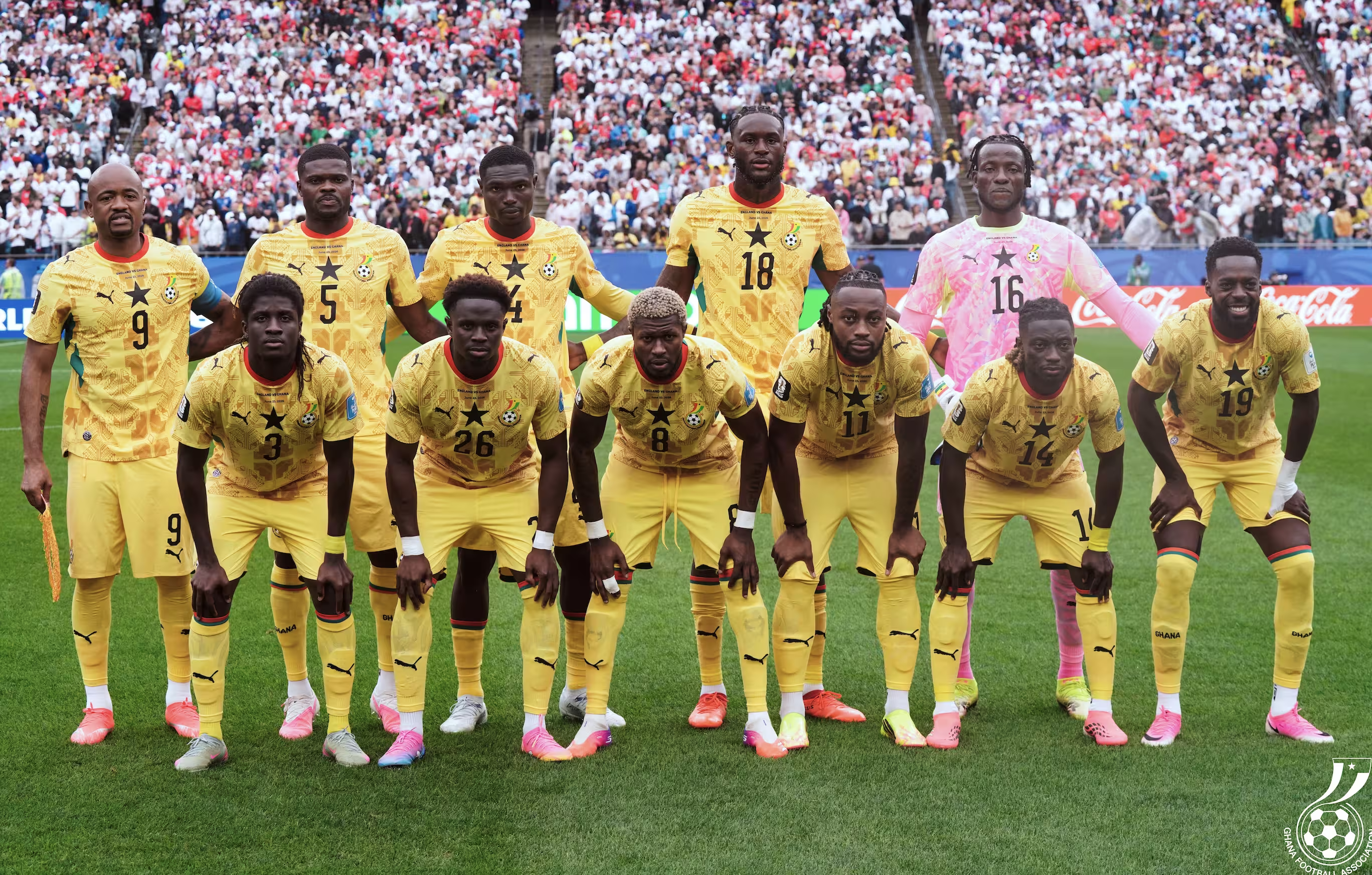
Every four years, the world gathers around a football. Nations celebrate heroes. Flags fly. Anthems echo through packed stadiums. Yet beneath the spectacle lies a paradox few people talk about. Africa may be the most important football continent on Earth and still be the only major football continent without a World Cup trophy.
When the next World Cup kicks off, Africa will once again be everywhere. In the starting lineups. In the academies. In the transfer markets. In the families cheering from Lagos, Accra, Dakar and Kinshasa. The question is whether Africa has already won the World Cup in every way except the one that counts on paper.
THE CONTINENT THAT BUILT A GAME
Modern football is often presented as a contest between nations.
Brazil versus Germany.
France versus Argentina.
England versus Spain.
But the reality is far more complicated.
Take a closer look at many of the world's elite squads and a different story emerges. A story of migration, opportunity, colonial history and identity.
For decades, Europe has benefited from a steady flow of African football talent. Some players leave Africa as teenagers in pursuit of professional opportunities. Others are born in Europe to African parents who arrived generations earlier.
The result is that African influence runs through some of the most successful football nations in the world.
When France won the World Cup in 2018, commentators across the world debated the origins of many players in the squad. The conversation was often political, sometimes uncomfortable, but impossible to ignore. France's triumph was also a story about migration, integration and the enduring connections between Europe and Africa.
The same pattern can be found across Europe.
England.
Belgium.
The Netherlands.
Portugal.
Spain.
Many of their brightest stars have direct African roots.
The global game has become impossible to separate from Africa.
AFRICA'S GREATEST EXPORT IS NOT OIL
Nigeria exports crude oil.
Ghana exports gold and cocoa.
The Democratic Republic of Congo exports minerals.
But one of Africa's most valuable exports may be human talent.
Football has become a vast global industry worth billions of dollars. European clubs spend enormous sums identifying, developing and acquiring elite players.
Some of the world's most valuable footballers trace their heritage back to African countries.
Their performances generate broadcasting revenue, sponsorship deals, merchandise sales and ticket income that flow through the football economy.
Yet very little of that wealth finds its way back into the communities where many football dreams begin.
In neighbourhoods across Africa, young boys and girls still play on dusty pitches with makeshift goalposts. They dream of Europe because Europe remains where football's financial rewards are concentrated.
The talent is often African.
The infrastructure is often European.
The profits are largely global.
WHO GETS THE GLORY?
This is where the paradox becomes most painful.
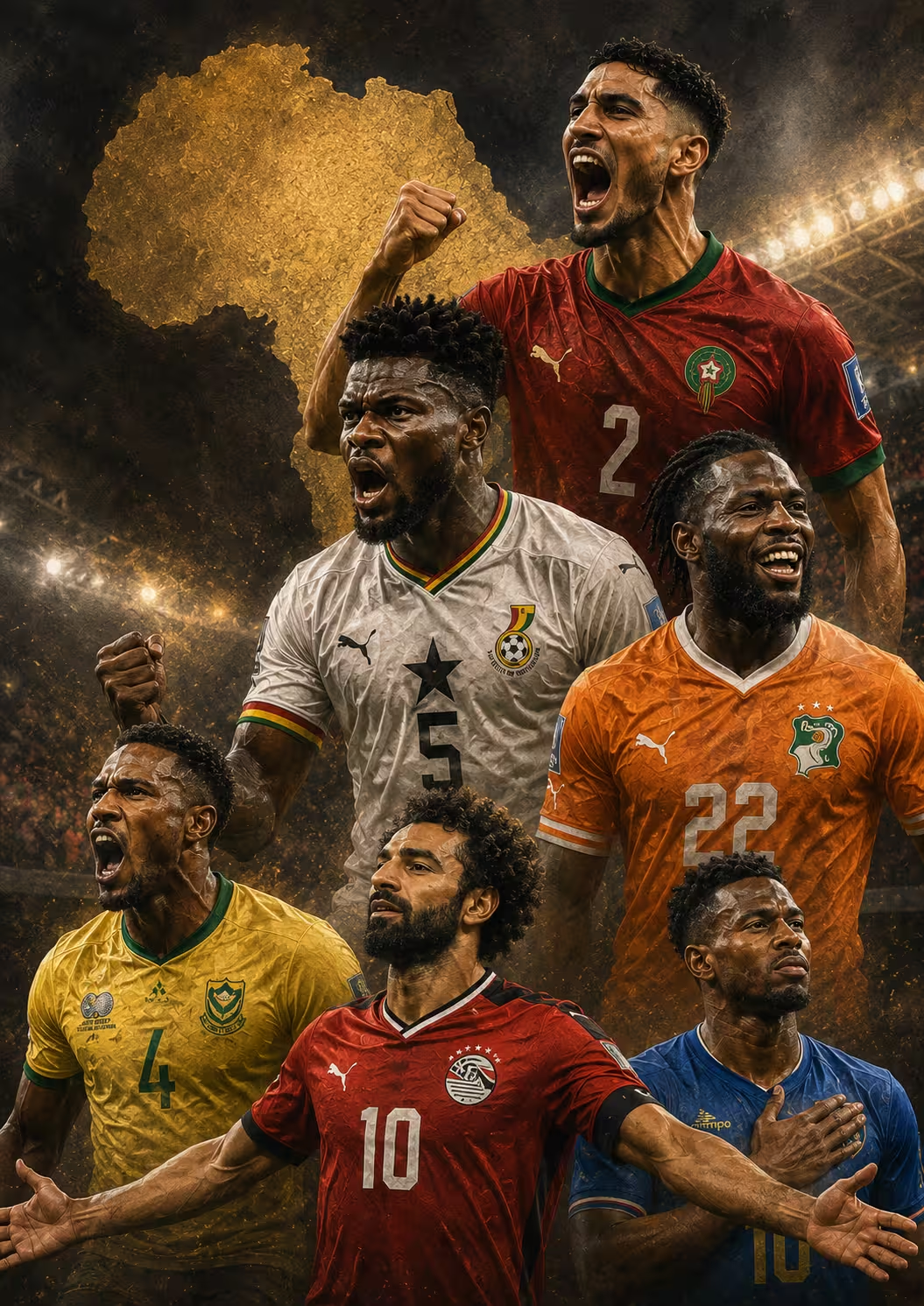
African nations have produced extraordinary footballers.
George Weah became one of the greatest players of his generation.
Samuel Eto'o conquered Europe.
Didier Drogba inspired a nation.
Mohamed Salah became a global icon.
Victor Osimhen is among the most feared strikers in world football.
Yet no African country has ever lifted the FIFA World Cup.
Morocco's historic run to the semi finals in 2022 came closer than most. For a brief moment, millions across Africa felt the possibility of something bigger.
It was not just Morocco playing.
It felt like an entire continent was advancing.
The celebrations stretched from Casablanca to Cape Town.
From Accra to Nairobi.
From Lagos to Johannesburg.
The dream remains alive because Africa's football story remains unfinished.
BORN IN AFRICA. PLAYING FOR ANOTHER FLAG.
Perhaps no issue captures the complexity of modern football more than dual nationality.
Every World Cup produces stories of players with African roots representing European countries.
For some, the decision is emotional.
For others, practical.
For many, it is both.
They are often asked to choose between birthplace and heritage.
Opportunity and sentiment.
Career and identity.
These choices are deeply personal, yet they reveal something larger about the world we live in.
The World Cup is not only a tournament.
It is a map of migration.
A map of families.
A map of history.
And Africa sits at the centre of many of those stories.
THE WORLD CUP'S BIGGEST QUESTION
Perhaps we have been asking the wrong question.
For years, people have asked:
"When will Africa win a World Cup?"
Maybe the more interesting question is:
"What does winning actually mean?"
If African talent powers elite clubs.
If African heritage shapes many national teams.
If African stories influence the global game.
Then perhaps Africa's influence cannot be measured only by trophies.
This does not mean the continent should stop chasing its first World Cup title.
Far from it.
That trophy still matters.
It would represent recognition, validation and history.
But the deeper story is already unfolding.
Africa has become one of football's most important engines.
The world watches the World Cup every four years.
What many fail to see is how much of that spectacle depends on Africa.
THE ARN VIEW
The World Cup is often described as the world's game.
Yet the story beneath the tournament is also the story of Africa.
A continent exporting talent.
A continent shaping identities.
A continent influencing the global game far beyond its borders.
Africa may not yet have a World Cup trophy in its cabinet.
But it already has fingerprints all over football's greatest stage.
And perhaps that is where the real story begins.
WORLD CUP FILES | EDITION 001
Africa Reporters Network
Decoding Africa. Telling Our Stories. Shaping Our Future.


.png)
Stay informed with the latest African media trends, job opportunities, and development news. Connecting Africa with global media and development partners.
.png)
.avif)
.avif)
.jpeg)