.png)


Africa has given world football some of its greatest names.
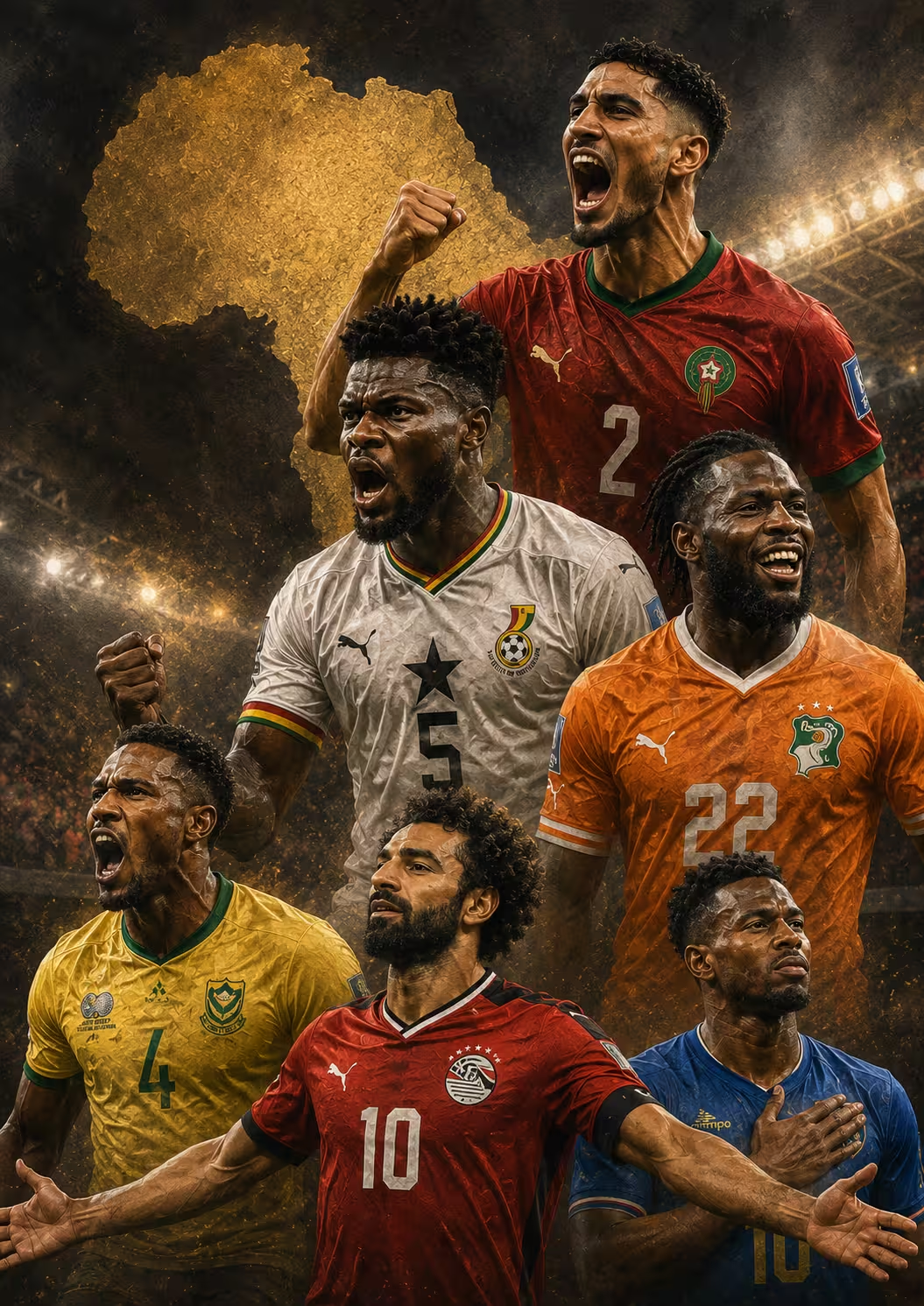
George Weah. Samuel Eto'o. Didier Drogba. Mohamed Salah. Sadio Mané. Victor Osimhen. Achraf Hakimi.
The continent has produced Ballon d'Or winners, Champions League winners, Premier League stars, La Liga icons and national heroes. African footballers have shaped clubs, inspired countries and carried the hopes of millions.
Yet one question remains unanswered.
Why has no African country ever won the FIFA World Cup?
It is one of football's most debated questions. Every four years, the conversation returns. Fans point to talent. Coaches point to preparation. Administrators point to resources. Others blame luck, refereeing, federation politics or poor planning.
But the truth may be deeper than one bad match or one missed penalty.
World Cups are not usually won by talent alone.
They are won by systems.
The argument that Africa lacks football talent does not survive serious examination.
African players compete at the highest level of global football. They play for elite clubs, win major trophies and often become central figures in the world's strongest teams.
Across Europe's top leagues, African players and players of African heritage are visible everywhere.
This proves one thing clearly:
Africa can produce world-class footballers.
The problem is not individual brilliance.
The problem is whether individual brilliance is being supported by the structures needed to win the biggest tournament in the world.
A World Cup is not won only during the tournament.
It is built years earlier.
In youth academies.
In coaching systems.
In domestic leagues.
In football federations.
In sports science departments.
In scouting networks.
In long-term national planning.
The countries that consistently compete for the World Cup do not depend only on gifted players. They build machines around those players.
They invest in coaching.
They organize youth football.
They create strong leagues.
They develop technical identities.
They protect preparation time.
They plan across generations.
For many African countries, the talent is present, but the supporting system is often inconsistent.
Football governance remains one of the biggest issues in African football.
Many national teams have faced problems with federation disputes, unpaid bonuses, poor planning, coaching instability and administrative distractions.
These problems matter.
At the World Cup level, small weaknesses become major disadvantages.
A team can have great players and still fail if preparation is chaotic.
A team can have passion and still struggle if planning is short-term.
A team can have stars and still collapse if there is no clear system behind them.
International football rewards countries that prepare early and execute calmly.
Africa's challenge has often been that too many teams arrive with talent, but not always with stability.
Football infrastructure is another major issue.
Elite football today is no longer just about skill. It is also about training facilities, medical teams, analytics, nutrition, recovery, psychology and tactical preparation.
These things are expensive.
They require long-term investment.
They require institutions that understand football as a serious industry, not just a tournament event.
Many African countries still produce outstanding players despite limited infrastructure.
That is impressive.
But it also reveals the problem.
If Africa produces this much talent with imperfect systems, imagine what the continent could produce with world-class football infrastructure.
Morocco's historic run to the semi-finals at the 2022 FIFA World Cup changed how the world sees African football.
For the first time, an African team reached the final four.
Morocco did not only rely on passion.
It showed discipline, organization, tactical clarity and belief.
That run proved that an African country can compete deep into the tournament.
It also showed what happens when talent meets structure.
Morocco's success did not answer every question.
But it changed the question.
The debate is no longer whether Africa can compete.
The debate is what Africa must build to finish the job.
There is also a psychological dimension.
For decades, African teams have entered the World Cup carrying history, expectation and pressure.
Near misses have shaped the continent's football memory.
Cameroon's 1990 run.
Senegal's 2002 run.
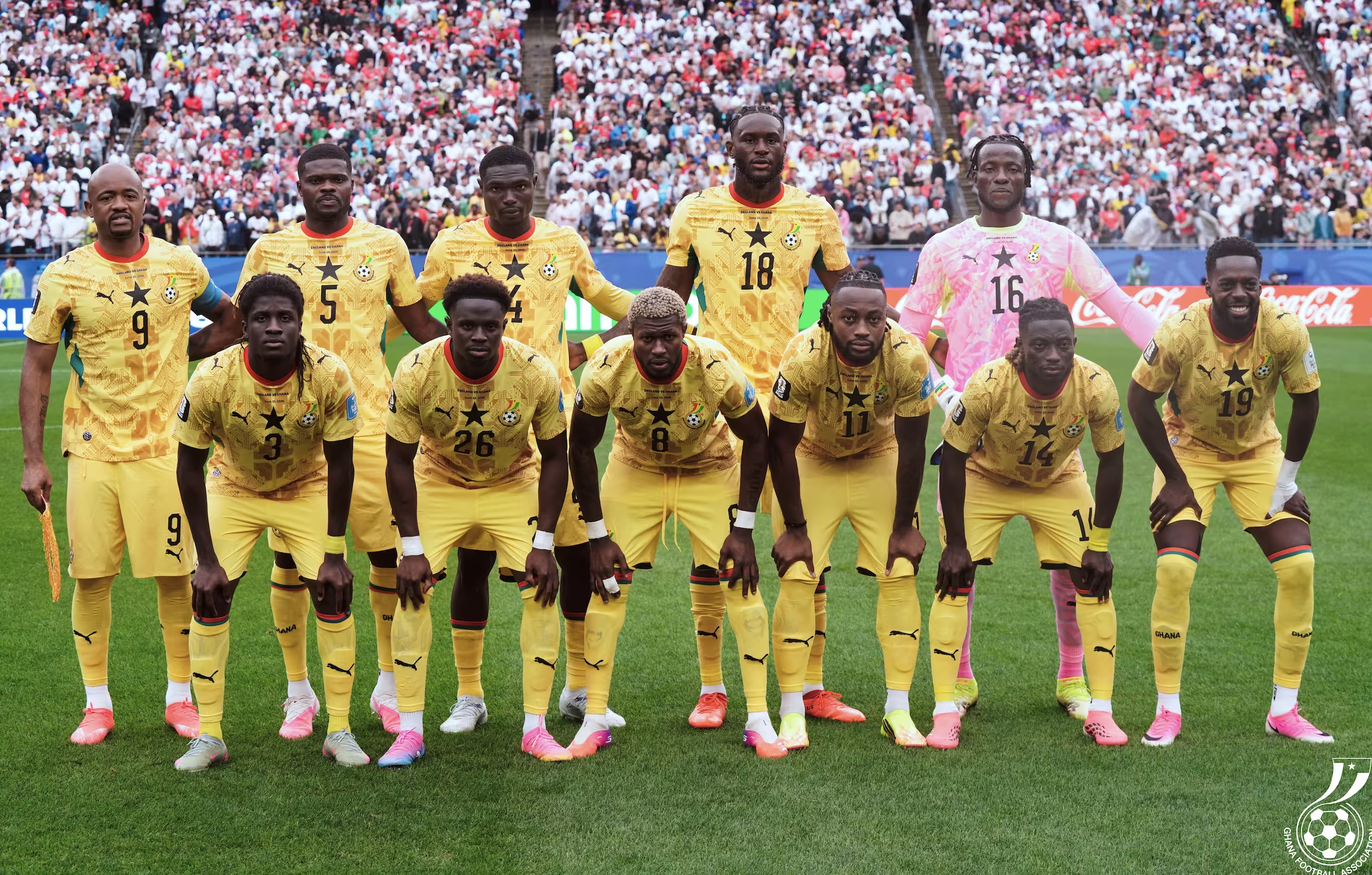
Ghana's heartbreak in 2010.
Morocco's breakthrough in 2022.
Each moment brought Africa closer.
Each also deepened the hunger.
But at the highest level, belief must be supported by preparation. Emotion can carry a team through one night. Systems carry teams through seven matches.
That is the difference between a great World Cup run and a World Cup title.
The World Cup question is not only about football.
It reflects a larger African challenge.
The continent has talent.
In sport.
In business.
In music.
In technology.
In culture.
In education.
But talent alone does not guarantee dominance.
Systems do.
Institutions do.
Investment does.
Long-term planning does.
Africa's football story mirrors Africa's wider development story. The raw material is exceptional. The question is whether the continent can build the structures that turn potential into power.
For Africa to win the World Cup, the solution cannot begin one year before the tournament.
It must begin much earlier.
African countries need stronger youth development systems.
Better football administration.
More investment in coaching.
Better domestic leagues.
World-class training infrastructure.
Serious sports science.
Stable national team planning.
And above all, a long-term vision that survives beyond one coach, one federation president or one golden generation.
Winning the World Cup will require more than hope.
It will require a football system built to win.
Africa has the players.
Africa has the passion.
Africa has the football culture.
What Africa still needs is the machinery.
The countries that win World Cups are not always the countries with the most gifted individuals. They are often the countries that know how to organize talent into a system.
That is Africa's next frontier.
The trophy is not out of reach because Africa lacks greatness.
It is out of reach because greatness must be organized.
And when Africa finally builds the systems to match its talent, the World Cup will no longer feel like a distant dream.
It will feel like an appointment waiting to happen.
World Cup Files | Edition 004
Africa Reporters Network
Decoding Africa. Telling Our Stories. Shaping Our Future.


.png)
Stay informed with the latest African media trends, job opportunities, and development news. Connecting Africa with global media and development partners.
.png)
.avif)
.avif)
.avif)
.jpeg)