.png)


Before Ghana had a name, one Accra family was already producing doctors, lawyers, merchants and political thinkers
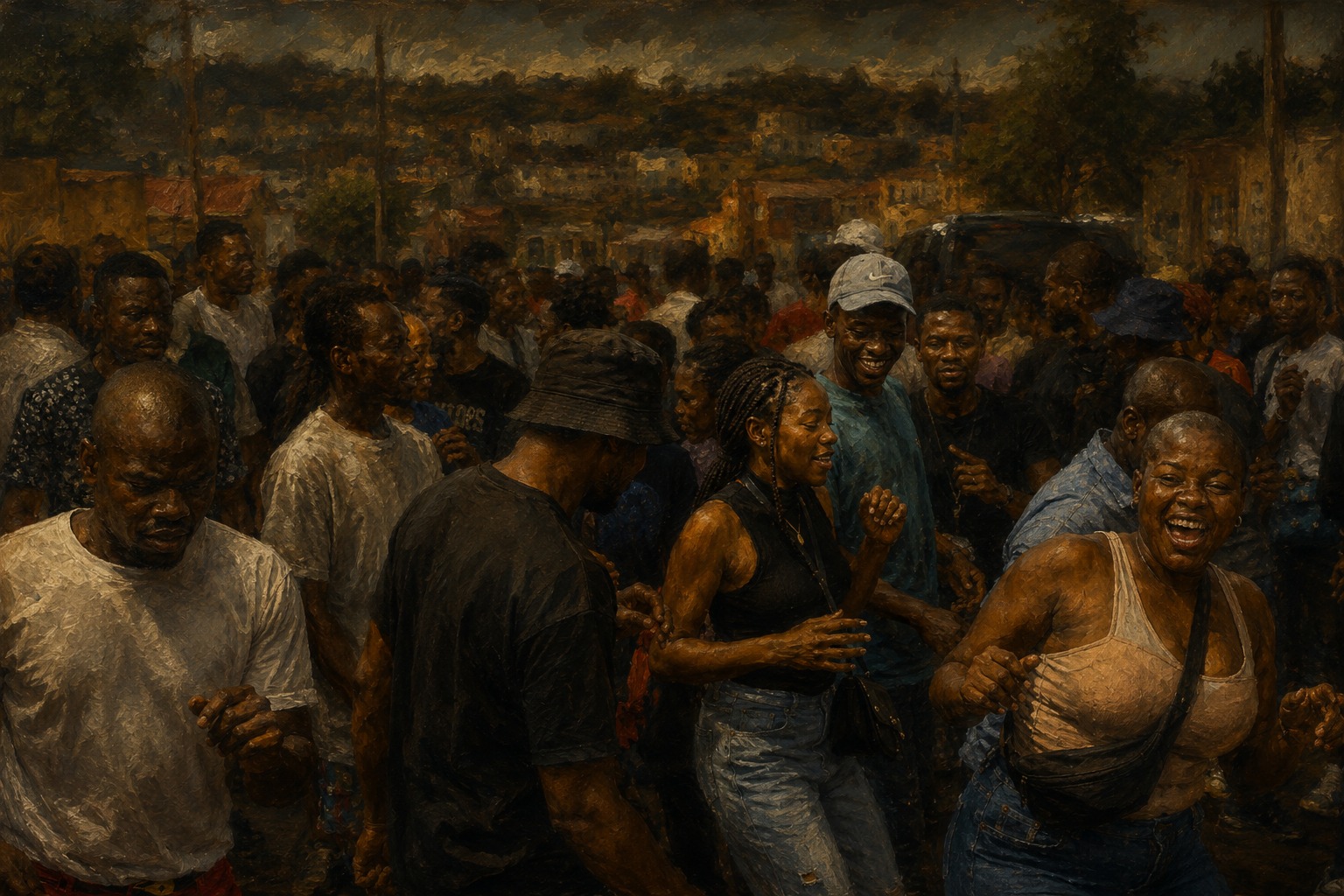
As the Ga celebrate Homowo, Africa Reporters Network begins a historical journey into the people and families who helped shape Accra. Chapter One starts with Benjamin Quartey-Papafio and an extraordinary family whose story reaches into medicine, law, commerce, politics and the documentation of Ga culture.
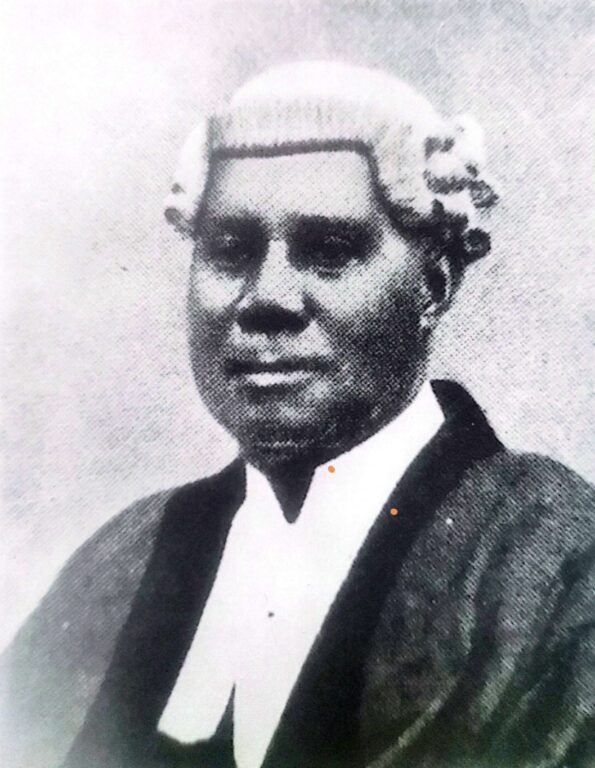
When Benjamin William Quartey-Papafio was born in Accra on June 25, 1859, there was no country called Ghana.
Accra was not yet the capital of the Gold Coast.
Along the coast, Ga communities lived around settlements including James Town, Ussher Town and Christiansborg. The Atlantic was not simply scenery. It was a commercial highway connecting Accra to Britain, Europe and other parts of West Africa.
From this Accra, Benjamin Quartey-Papafio would eventually travel to Europe.
And when he returned, he came home with something almost unprecedented for a man from the Gold Coast: a European medical qualification.
But his story is much more interesting than the familiar description of him as Ghana’s first doctor.
It is also the story of what happened when a highly trained African physician entered a colonial system that could recognise his competence while refusing to treat him as an equal.
And behind Benjamin stood an equally remarkable family.
A trader.
A barrister.
A businessman.
Political figures.
Writers.
Later generations of lawyers and educators.
The Quartey-Papafios were becoming part of an African professional class in Accra decades before Ghana became an independent country.
This is where Accra Before Ghana begins.
Benjamin’s father was William Quartey-Papafio, also known as Nii Kwatei-Kojo or “Old Papafio”, an Akwashotse chief associated with Asere.
His mother was Momo Omedru, remembered in surviving accounts as a businesswoman with connections to Gbese in Accra and Amanokrom in Akuapem.
That detail deserves attention.
The usual telling of Benjamin’s life begins when he enters a European university.
But the conditions that made such an education possible began much earlier, within an African family operating in the commercial and political world of nineteenth-century Accra.
There are family traditions concerning Momo Omedru and possible links to herbal medicine in Akuapem. Those traditions are intriguing, but Africa Reporters Network is treating them as research leads until they can be independently supported by archival evidence.
What is documented is that her sons entered a remarkable range of professions.
Benjamin pursued medicine.
Emmanuel William Kwate Quartey-Papafio became an agriculturist and trader.
Their younger brother, Arthur Boi Quartey-Papafio, would become a barrister and writer on Ga customs, institutions and law.
The dates alone make the family remarkable.
Benjamin was born in 1859.
Ghana became independent in 1957.
Almost a century separates the two events.
Benjamin’s education first took him outside the Gold Coast to Freetown in Sierra Leone, one of the most important centres of Western education for Africans in British West Africa.
He studied at the Church Mission Society Grammar School and Fourah Bay College before travelling to Britain.
He later studied at Durham and enrolled at St Bartholomew’s Hospital Medical College in London in 1882.
From there, he continued his medical education at the University of Edinburgh.
By 1886, he had qualified in medicine.
The University of Edinburgh has described him as the first native of the Gold Coast to earn a medical degree in Europe.
That distinction should be stated carefully.
Calling Benjamin “Ghana’s first doctor” is convenient, but historically imprecise.
Ghana did not yet exist.
African healing systems and medical practitioners had also existed long before European medicine arrived.
What Benjamin represented was more specific: he was among the earliest Gold Coast Africans to train and qualify within the European medical system and return to practise at home.
That achievement would place him directly inside one of colonialism’s central contradictions.
The empire could educate an African to European professional standards.
It was much less comfortable allowing him European professional authority.
Benjamin returned to the Gold Coast and entered medical practice.
Historical accounts differ slightly over the precise chronology of his early private practice and entry into government service, but he was serving in the colonial medical establishment by the late 1880s.
What is much clearer is his professional reputation.
Historical research into colonial medicine has uncovered evidence of European officials praising Quartey-Papafio’s work.
One surviving account involves Captain W. R. Reeve-Tucker of the Gold Coast Constabulary.
After falling seriously ill, Reeve-Tucker wrote thanking Quartey-Papafio for his medical attention and indicated that he believed the doctor may have saved his life.
That detail matters.
The problem was not that Benjamin’s European colleagues regarded him as incapable.
Quite the opposite.
He belonged to a small generation of highly trained West African doctors whose competence directly challenged colonial assumptions about race and professional hierarchy.
That would eventually become a problem for the system.
Benjamin repeatedly attempted to advance within the colonial medical service.
He was not successful.
Historical research suggests that race was central to the way African doctors were restricted within the colonial establishment.
British officials were increasingly concerned about the implications of allowing highly qualified African doctors to rise through the service.
Senior positions could mean authority over European officers.
That challenged the racial order on which much of colonial administration depended.
Benjamin had trained in Britain.
He held recognised qualifications.
He had practical experience.
European patients praised his work.
Yet advancement remained constrained.
This was colonialism operating not only through governors and legislation, but through professional ceilings.
An African could enter the institution.
He could prove himself.
He could serve the institution.
But there could still be a point beyond which he was not expected to rise.
By 1905, Benjamin left government medical service and concentrated on private practice and public life.
In one sense, colonial medicine had restricted his career.
In another, it had pushed him deeper into Accra.
Benjamin established himself in private medical practice in Accra.
Accounts place his practice on High Street, one of the most important commercial and administrative corridors in colonial Accra.
Above the practice was reportedly the phrase:
Domi Abra.
It has been translated approximately as:
“If you love me, come.”
The detail is memorable because it brings Benjamin back from the abstraction of colonial history.
After British universities and government medical service, there was an African doctor practising on High Street in Accra, speaking to the city in language people could recognise.
But private practice was not the end of his intellectual life.
Benjamin was also studying disease in the Gold Coast.
In 1896, Benjamin completed a Doctor of Medicine thesis at the University of Edinburgh.
Its title was:
“Malarial haemoglobinuric fever, so-called Blackwater Fever of the Gold Coast: chiefly from a clinico-pathological standpoint, with illustrative cases.”
The thesis remains preserved in the University of Edinburgh’s research archive.
This is one of the most significant parts of his career.
Benjamin had not simply travelled to Europe to absorb European knowledge.
He took clinical experience from the Gold Coast and turned it into formal medical research.
His thesis examined disease encountered in the region and drew on patient cases from his professional experience.
That matters because it complicates another familiar colonial narrative.
Africans were not simply patients examined by foreign doctors.
Some Africans were already producing medical knowledge themselves.
Benjamin Quartey-Papafio was one of them.
Benjamin’s public life eventually moved beyond medicine.
He served on the Accra Town Council between 1909 and 1912 and became increasingly involved in political questions concerning land, representation and African rights.
In 1911, he joined a deputation that travelled to London to challenge colonial proposals concerning land and the Forest Bill.
In 1919, he became an unofficial African member of the Gold Coast Legislative Council, serving until 1924.
His politics were complicated.
Benjamin cannot simply be inserted into the later nationalist story that would eventually produce independence.
His generation operated in a different political world.
Educated African professionals, merchants, traditional rulers and political organisations were already debating who legitimately represented African interests.
Benjamin could oppose colonial policies while simultaneously disagreeing with other African political activists.
He was particularly cautious about political arrangements he believed ignored traditional authority.
That is important.
Accra Before Ghana is not a project about manufacturing heroes.
It is about understanding the people who operated inside, negotiated with and sometimes resisted colonial institutions.
Those people often disagreed with one another.
That was part of the making of modern Ghana.
Benjamin would already deserve a place in Ghanaian history on the strength of his medical career.
But the wider Quartey-Papafio family makes the story more significant.
His younger brother Arthur Boi Quartey-Papafio followed another route into the emerging African professional class.
Law.
Arthur attended school in Accra and Fourah Bay College before studying at Cambridge.
He was later called to the Bar at Lincoln’s Inn in London and returned to practise law in Accra.
He served on the Accra Town Council.
He participated in journalism.
He wrote about Ga customary institutions, history and law.
And his work brought him directly into the social and economic questions facing ordinary Gold Coast communities.
But one particular piece of writing makes Arthur central to this Homowo series.
In 1920, the Journal of the Royal African Society published Arthur Boi Quartey-Papafio’s work:
The study appeared in two instalments.
Part One was published in January 1920.
Part Two followed in April.
More than a century ago, therefore, a Ga lawyer from Accra was already committing Homowo and Ga cultural practice to the written historical record.
That fact connects the Quartey-Papafio family directly to the reason Africa Reporters Network is telling this story now.
Homowo is not only a festival.
It is an act of memory.
And Arthur was already trying to preserve some of that memory more than 100 years ago.
Consider the pattern.
Benjamin becomes a pioneering physician.
Emmanuel becomes an agriculturist and trader.
Arthur becomes a barrister and writer.
Later members of the wider family, including Clement W. Quartey-Papafio and Hugh Quartey-Papafio, also entered law.
This was happening before Ghana had universities of its own.
Before independence.
Before the creation of the modern Ghanaian state.
So the deeper question is not simply:
Who was Ghana’s first doctor?
The more interesting question is:
Once that question is asked, other names begin appearing.
Hutton-Mills.
Nanka-Bruce.
Reindorf.
Hesse.
Bannerman.
Vanderpuije.
Doctors.
Lawyers.
Merchants.
Educators.
Journalists.
Politicians.
Families whose lives intersected through marriage, business, education, religion and public life.
Modern Accra did not suddenly begin in 1957.
Parts of its professional and intellectual infrastructure were already being assembled generations earlier.
One of the most interesting things about the Quartey-Papafios is that European education did not necessarily erase local identity.
Arthur demonstrates this clearly.
He studied in Sierra Leone.
He went to Cambridge.
He trained in British law.
He practised before colonial courts.
Yet he also wrote about Ga names, customary law, institutions and Homowo.
Benjamin trained in Edinburgh and returned home to Accra.
Their education expanded their worlds.
It did not make Accra irrelevant.
Accra remained home.
Because Homowo is fundamentally about memory.
It remembers hunger.
It remembers survival.
It remembers those who came before.
And there are other forms of forgetting happening in Accra.
We drive along roads carrying old family names without knowing who those people were.
We pass historic neighbourhoods without knowing who lived there.
We hear that someone was “Ghana’s first” doctor, lawyer or politician without asking what Ghana looked like before Ghana existed.
Benjamin Quartey-Papafio died in Accra on September 14, 1924, aged 65.
By then, Accra had changed dramatically from the coastal settlement of his childhood.
It had become the capital of the Gold Coast.
He did not live to see Ghana become independent.
Neither did Arthur.
Their Ghana had not yet arrived.
But they were part of the world from which Ghana eventually emerged.
That is why Accra Before Ghana begins with the Quartey-Papafios.
Not because they built Accra alone.
They did not.
Not because they were perfect heroes.
They were not.
But because their lives reveal something important about the city.
Before Ghana had a flag, a parliament or an independence movement recognisable to us today, Accra already contained Africans building professional careers, challenging racial barriers, creating businesses, arguing about political representation and recording the culture of their city.
The Quartey-Papafios were among them.
And the next chapter takes us directly into Homowo.


.png)
Stay informed with the latest African media trends, job opportunities, and development news. Connecting Africa with global media and development partners.
%20(1).avif)
.avif)
.webp)
)%20(2).jpg)
.png)

.png)
)%20(4).jpg)