.png)


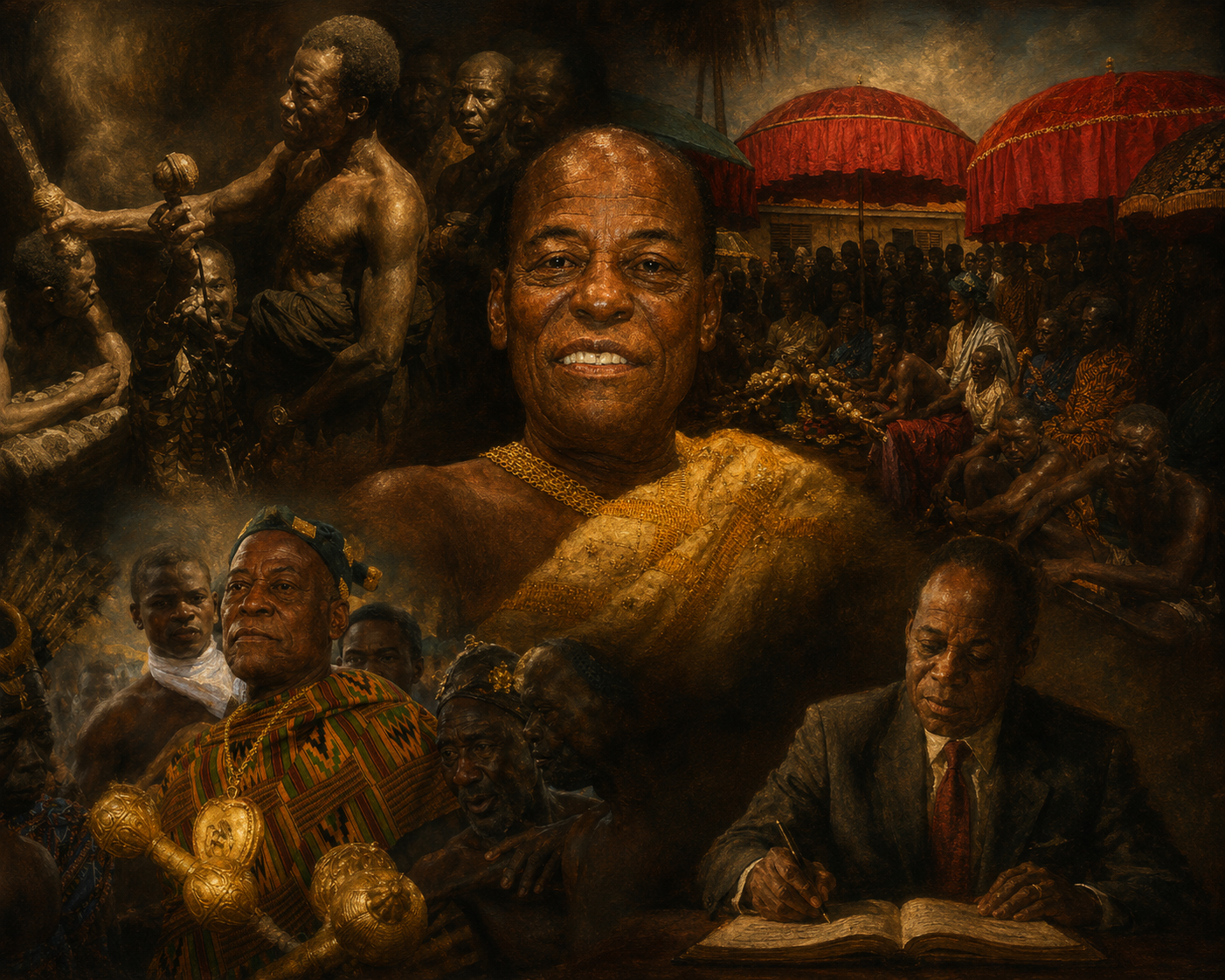
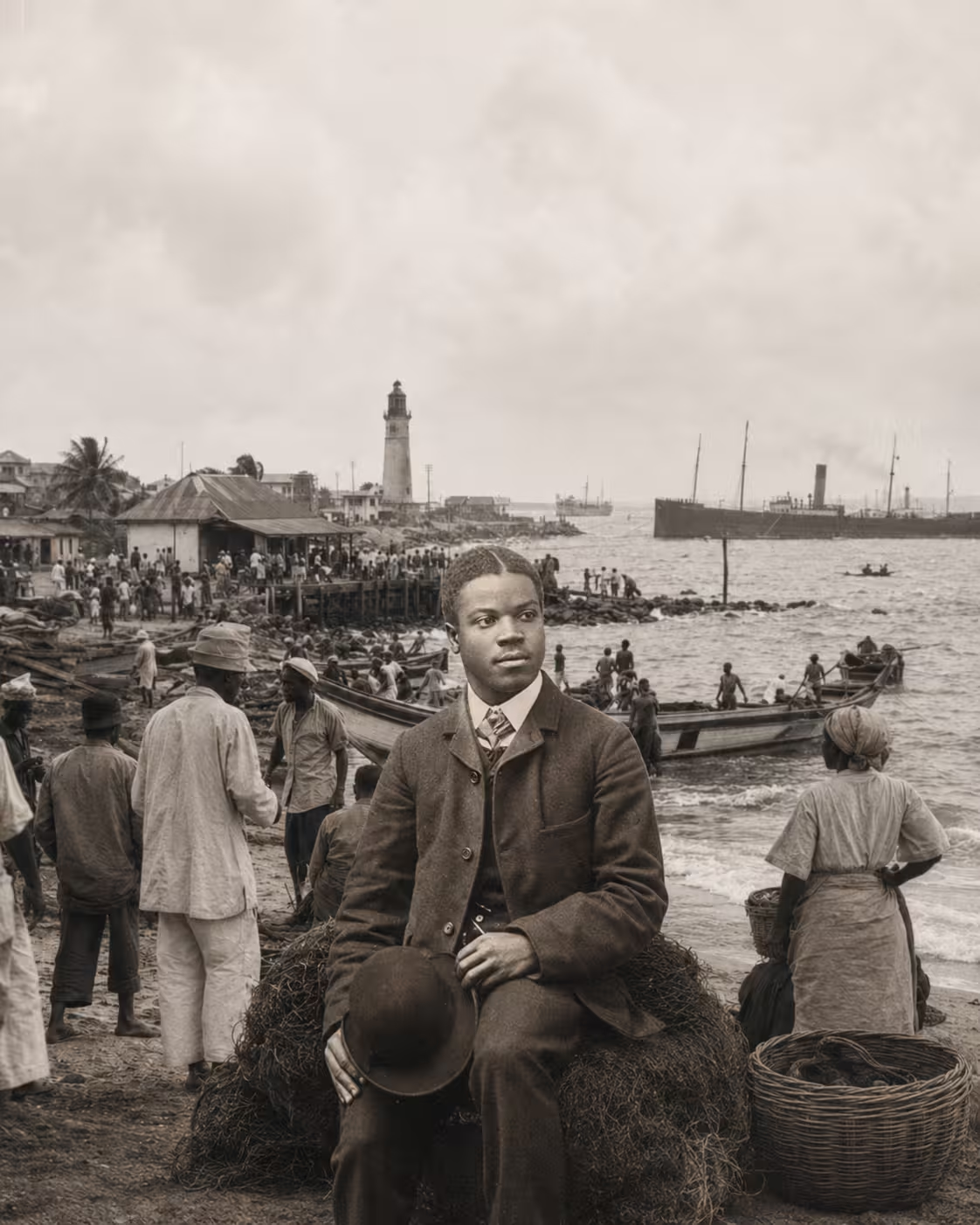
Accra, 1920.
There was no Ghana.
Independence was still 37 years away.
The British governed the Gold Coast. Accra had already become the colonial capital, with courts, government departments, trading companies and an expanding professional class.
But beneath that official city was another Accra.
A Ga Accra.
A city of stools and family houses. Fishermen and traders. Priests and traditional authorities. Rules about land, inheritance, marriage and responsibility. A city whose year was not measured only by the colonial calendar, but also by its own seasons, rituals and festivals.
Every year, Homowo changed the rhythm of that city.
And in 1920, one Accra lawyer decided that this world should be written down.
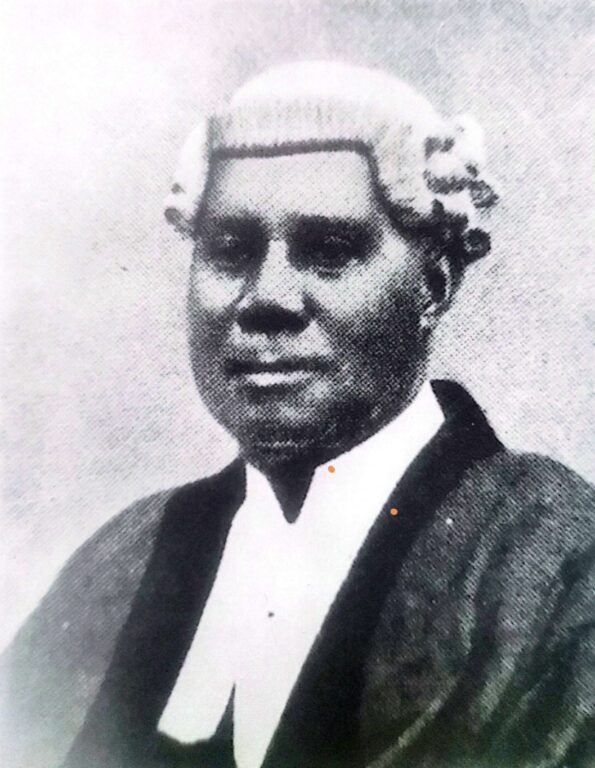
His name was Arthur Boi Quartey-Papafio.
He had studied at Fourah Bay College.
He had gone to Cambridge.
He had trained in British law.
He had been called to the Bar at Lincoln’s Inn.
Yet when Arthur sat down to write for the Journal of the Royal African Society, one of the subjects he chose was not English law.
It was Homowo.
More than a century later, his account remains part of the historical record.
And that makes Arthur Quartey-Papafio far more interesting than simply another successful colonial-era barrister.
His life raises a bigger question:
What did it mean to become highly educated in Britain and still return home believing that Ga knowledge, law and culture deserved serious attention?
That is where Chapter Two of Accra Before Ghana begins.
In Chapter One, we met Arthur’s older brother, Benjamin William Quartey-Papafio, the pioneering Gold Coast physician who trained in Britain and returned to practise medicine in Accra.
Arthur chose another profession.
Law.
Born in 1869, he was educated in Accra before attending Fourah Bay College in Sierra Leone. He later studied at Christ’s College, Cambridge, and was called to the Bar at Lincoln’s Inn in 1897.
Then he returned home.
That journey alone tells us something important about the Accra of the late nineteenth century.
Accra was already producing families capable of sending children through some of the most important educational institutions available to Africans at the time.
But Arthur’s story becomes more interesting after he came back.
Because the Accra he returned to was not governed by one legal system.
British colonial law existed.
Ga customary law existed too.
And the two did not always agree.
Colonial government often presented itself as the source of order.
But Ga society already had institutions governing everyday life.
There were rules concerning inheritance.
Rules concerning land.
Rules concerning family obligations.
Systems for resolving disputes.
Traditional authorities with recognised powers.
Customary practices governing fishing and the use of communal resources.
British rule did not arrive in an empty political landscape.
It arrived in a society that already had its own ways of organising authority.
Arthur Quartey-Papafio understood both worlds.
He had been trained in British law, but he also wrote about Ga succession, customary institutions and indigenous tribunals.
That placed him at the centre of one of colonial Accra’s most difficult questions:
When British law and Ga custom came into conflict, whose law should prevail?
For Arthur, this was not merely academic.
It entered the courtroom.
One of the most revealing cases associated with Arthur involved fishing communities along the Accra coast.
The dispute centred on a fishing net known as the ali net.
Some fishermen wanted restrictions placed on its use.
Others resisted.
The disagreement became serious.
Fishing equipment was seized.
Canoes were reportedly overturned.
Eventually, the dispute moved from the beach into the British colonial court system.
The fishermen challenging the restriction hired Arthur Quartey-Papafio.
Now imagine the scene.
A Cambridge educated African barrister stands before a British colonial court.
The judge is operating within British law.
But the argument involves Ga customary authority.
Who had the power to make the fishing rule?
Could fishermen make such a rule themselves?
Did a traditional ruler have to approve it?
Could a British court enforce a rule originating in indigenous custom?
Arthur argued that the restriction required the consent of the Teshie Mantse before it could properly carry authority.
On the opposing side was another African barrister, Charles James Bannerman.
Traditional leaders also entered the case.
Among those appearing in the wider dispute was Ga Mantse Tackie Tawiah I.
In a single courtroom, several versions of Accra met.
British judge.
African lawyers.
Ga fishermen.
Traditional rulers.
Colonial law.
Indigenous authority.
This was not simply a legal case.
It was a city negotiating what colonial rule actually meant.
This distinction matters.
On colonial maps, Accra could be represented as an administrative capital.
There was a governor.
There were courts.
There were government departments.
There were European commercial houses.
There was a Legislative Council.
But underneath that visible machinery was a much older social structure.
Ga quarters.
Stools.
Families.
Priests.
Fishermen.
Traditional leaders.
Rules about property.
Rules about succession.
Religious obligations.
Festivals.
A calendar of community life.
British government had been imposed over Accra.
It had not created Accra.
Arthur lived between these systems.
He could stand in a colonial court wearing the professional identity of a British trained barrister and argue about the legitimate authority of a Ga mantse.
He could participate in municipal government while studying indigenous institutions.
And he could be thoroughly familiar with European intellectual traditions while regarding Ga society as something worthy of documentation in its own right.
By 1920, Arthur had already written about aspects of Ga customary law and social organisation.
Then he turned his attention to something much more familiar to ordinary Accra families.
Homowo.
That year, the Journal of the Royal African Society published his study:
The article appeared in two parts.
The first was published in January 1920.
The second followed in April.
That means that more than a century ago, a Ga lawyer from Accra was deliberately placing Homowo into an international written record.
For a festival built largely on oral transmission, family practice and community memory, the significance is considerable.
Arthur did not create Homowo.
The Ga did not need a London journal to validate a festival they had celebrated for generations.
But Arthur did something valuable.
He created a written bridge.
His account allowed future historians to compare what Homowo looked like in the early twentieth century with what it became decades later.
And scholars still refer to that work today.
Today, Homowo can easily be reduced to its most visible moments.
Kpokpoi.
Chiefs.
Processions.
Drumming.
Crowds.
Food being sprinkled.
Celebration.
But the festival belongs to something larger.
Homowo is connected to a calendar.
Agriculture.
Rain.
Food.
Family.
Ancestry.
Traditional authority.
Community rules.
And the memory of hunger.
The story of Homowo is commonly understood through the Ga experience of scarcity and eventual abundance.
The celebration therefore carries something deeper than entertainment.
It remembers survival.
This is why the season traditionally involves more than the final public celebration.
There are periods of preparation.
Community restrictions.
Agricultural activity.
Family obligations.
Ritual observances.
Then celebration.
To understand Homowo merely as a festival day is to miss the system around it.
Arthur’s account matters because it helps us see Homowo as part of the way old Accra organised time itself.
Cities forget quickly.
Old houses disappear.
Coastlines change.
Harbours are abandoned.
Neighbourhoods expand.
Roads replace compounds.
Family lands are divided.
Buildings carrying generations of memory are demolished and replaced.
Even names survive long after their meanings are forgotten.
Festivals work differently.
They preserve memory through repetition.
Every year, a community performs the same act.
Prepare this food.
Return to this place.
Remember these people.
Observe this restriction.
Visit this family.
Speak these words.
A festival becomes a kind of living archive.
Documents can disappear.
Buildings can collapse.
But if a community repeats something for generations, memory survives in practice.
That may be one of the most powerful things about Homowo.
Arthur left us a written record.
The Ga people left something larger.
They continued celebrating.
There is another reason Arthur’s story matters.
Colonial history is often told through a simple contrast.
Traditional Africa on one side.
Western modernity on the other.
But Arthur’s life refuses that neat division.
He attended Fourah Bay College.
He went to Cambridge.
He trained at Lincoln’s Inn.
He became a barrister.
He operated within the British legal system.
Yet he returned home and wrote about Ga customary law.
Ga institutions.
Ga authority.
And Homowo.
His Western education did not automatically erase his interest in local knowledge.
If anything, it appears to have given him another set of tools through which to document and argue about it.
That is a very different story from the idea that becoming modern required becoming culturally detached.
Arthur moved between worlds.
So did many members of the African professional class emerging in Accra.
The more we investigate them, the less useful the simple categories become.
Traditional.
Modern.
African.
European.
Colonial.
Nationalist.
Their lives often contained all of these worlds at once.
Arthur’s public life extended beyond the courtroom and scholarship.
He served on the Accra Town Council from 1905 to 1909.
He was involved in journalism and associated with the Gold Coast Advocate.
He also became involved in the National Congress of British West Africa, an organisation formed by educated West Africans seeking greater African participation in colonial government.
This matters because Ghana’s political history is often compressed into the final decade before independence.
The United Gold Coast Convention.
The Convention People’s Party.
Kwame Nkrumah.
The 1948 disturbances.
Positive Action.
Those events were decisive.
But they did not emerge from nowhere.
Decades earlier, African lawyers, merchants, journalists, chiefs and professionals were already debating representation.
Already forming political organisations.
Already writing newspapers.
Already petitioning colonial government.
Already arguing about the relationship between educated elites and traditional authority.
Arthur belonged to this earlier political generation.
The road to independence was much longer than the last ten years of colonial rule.
Arthur’s account of Homowo is valuable.
But it should not be treated as the final authority on Ga culture.
He was one observer.
One writer.
One member of a particular family and social class.
He had been educated within British institutions.
And he was writing for a journal connected to the Royal African Society.
That context matters.
The people he described already understood Homowo without him.
Families did not require a scholarly article to teach them how to observe their own festival.
Priests maintained ritual knowledge.
Traditional authorities maintained community obligations.
Women prepared the food and sustained households.
Children learned by participating.
Fishermen and farmers understood the relationship between the festival, food and season.
Homowo survived because communities practised it.
Arthur’s contribution was different.
He left evidence.
And evidence allows later generations to ask better questions.
What has remained the same?
What changed?
What disappeared?
What did Arthur see clearly?
What might he have misunderstood?
And what knowledge survives today outside the written archive?
That is where historical journalism becomes useful.
Not simply repeating what an old document says.
But placing it beside living memory.
Benjamin entered medicine.
Arthur entered law.
Other members of the family entered trade, agriculture and the legal profession.
But as we follow their world, something else begins to happen.
Other Accra names start appearing.
Bannerman.
Hutton-Mills.
Nanka-Bruce.
Reindorf.
Hesse.
Vanderpuije.
The same professions appear.
Law.
Medicine.
Commerce.
Journalism.
Education.
Municipal government.
Politics.
Then the family connections begin appearing too.
Marriage.
Professional partnerships.
Political alliances.
Courtroom battles.
Newspapers.
Churches.
Schools.
What initially looks like a collection of exceptional individuals begins to resemble something much bigger.
A network of families operating across old Accra before Ghana existed.
And that may be one of the most important discoveries of this series.
Modern Accra was not created by government after independence.
Some of its intellectual, professional and commercial foundations were being built generations earlier.
Arthur Boi Quartey-Papafio died in 1927.
He was 58.
He had lived through an extraordinary transformation of Accra.
The city had become the capital of the Gold Coast.
Colonial government was expanding.
African newspapers were growing.
Professional African politics was developing.
Lawyers and doctors educated abroad were returning home.
Old institutions and new institutions were constantly negotiating with one another.
Arthur stood inside that transition.
Accra sent him away to learn.
Britain trained him in law.
Then he returned.
And among the subjects he believed deserved serious attention were the institutions and festival of his own people.
Perhaps that is the simplest reason he belongs in this Homowo series.
Not because Arthur gave Homowo its importance.
Homowo already had that.
But because more than a century ago, he understood that there was something in the life of Accra worth recording.
And because he wrote it down, part of that Accra can still speak to us today.
The story, however, is becoming larger than the Quartey-Papafios.
Because the next name takes us deeper into the network.
Law.
Politics.
Newspapers.
Family connections.
And another route into the making of modern Accra.
That is where Accra Before Ghana goes next.
NEXT IN THE SERIES
The Hutton-Mills: Law, Politics and the Family Networks of Old Accra
Accra Before Ghana is a Homowo historical series by Africa Reporters Network exploring the people, families and institutions that shaped Accra before independence.


.png)
Stay informed with the latest African media trends, job opportunities, and development news. Connecting Africa with global media and development partners.
.avif)
.avif)
)%20(4).jpg)
.png)
)%20(2).jpg)
%20(1).avif)